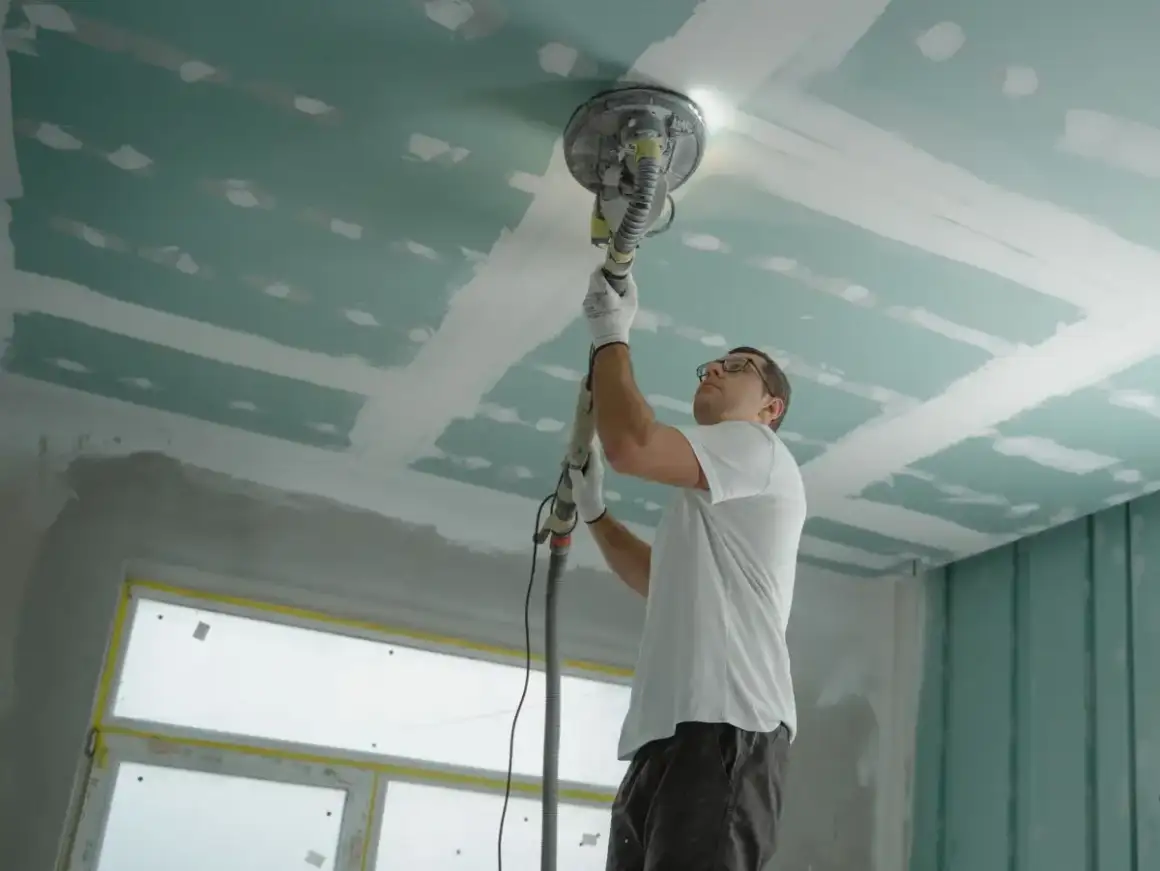
Ceiling Drywall Repair in Madison, WI — Residential & Commercial Ceiling Repair Specialists
Cracks, sags, holes and loose board repaired across Madison and Dane County. Ceilings are read in flat light from twenty feet away, which is the hardest condition any surface in a house faces.
Ceiling Drywall Repair in Madison, WI
Madison Elite Drywall is your local resource for ceiling drywall repair throughout Madison and Dane County. We work with experienced drywall professionals who repair, reboard and texture-match ceilings in Madison homes and commercial spaces.
A ceiling is harder than a wall in every way that matters. It is fastened overhead against gravity, it spans between joists that may sit 24 inches apart, and it is viewed from across a room in even, diffuse light rather than straight on. That last point is why ceiling repairs are held to a higher standard than wall repairs — flat overhead light finds every ridge, dish and texture mismatch a side-lit wall would forgive.
Ceiling problems in Dane County come from three directions. Framing above moving with the seasons, which the clay soils and four-foot frost line here reliably produce. Fasteners losing their grip as construction lumber dries out, which shows up in Madison's substantial newer housing stock. And span — half-inch board across 24-inch joists creeps under its own weight over decades whether or not anything is wrong with it.
Water is a fourth cause and it is deliberately not the subject of this page. A stained ceiling is repaired the same way once everything is dry, but the diagnosis and sequencing belong on the water-damaged drywall page, because getting that order wrong is how a ceiling gets repaired twice.
What’s Included in a Madison Ceiling Drywall Repair Quote
- Cavity above the ceiling inspected where access allows, before anything is quoted
- Board sounded across a wide area to map the loose zone rather than the visible crack
- Joist spacing and board thickness confirmed, since span problems no repair can fix
- Sound board refastened into solid framing with new fasteners beside the failed ones
- Failed tape cut from cracks and re-taped rather than filled
- Openings cut square with backing added, because a ceiling patch cannot float
- Texture sampled on scrap and matched before anything is sprayed overhead
- Whole floor area protected — ceiling work rains debris well beyond the repair
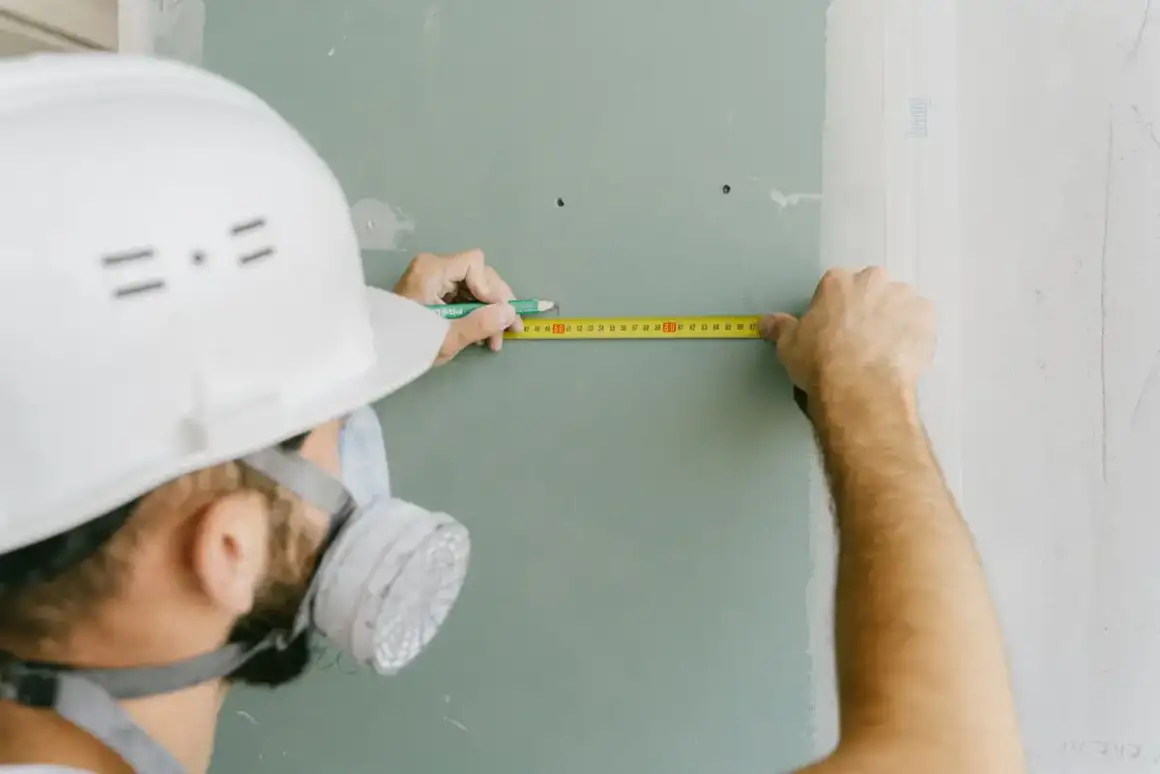
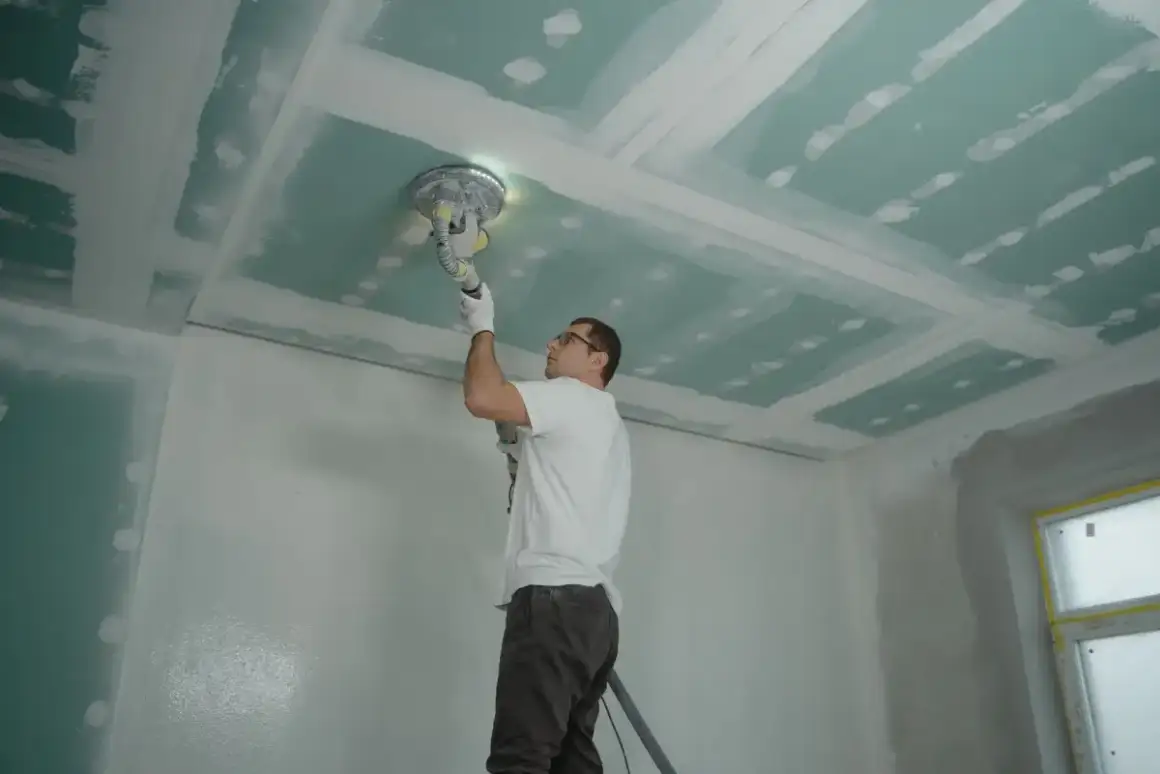
Ceiling Drywall Repair in Madison, WI
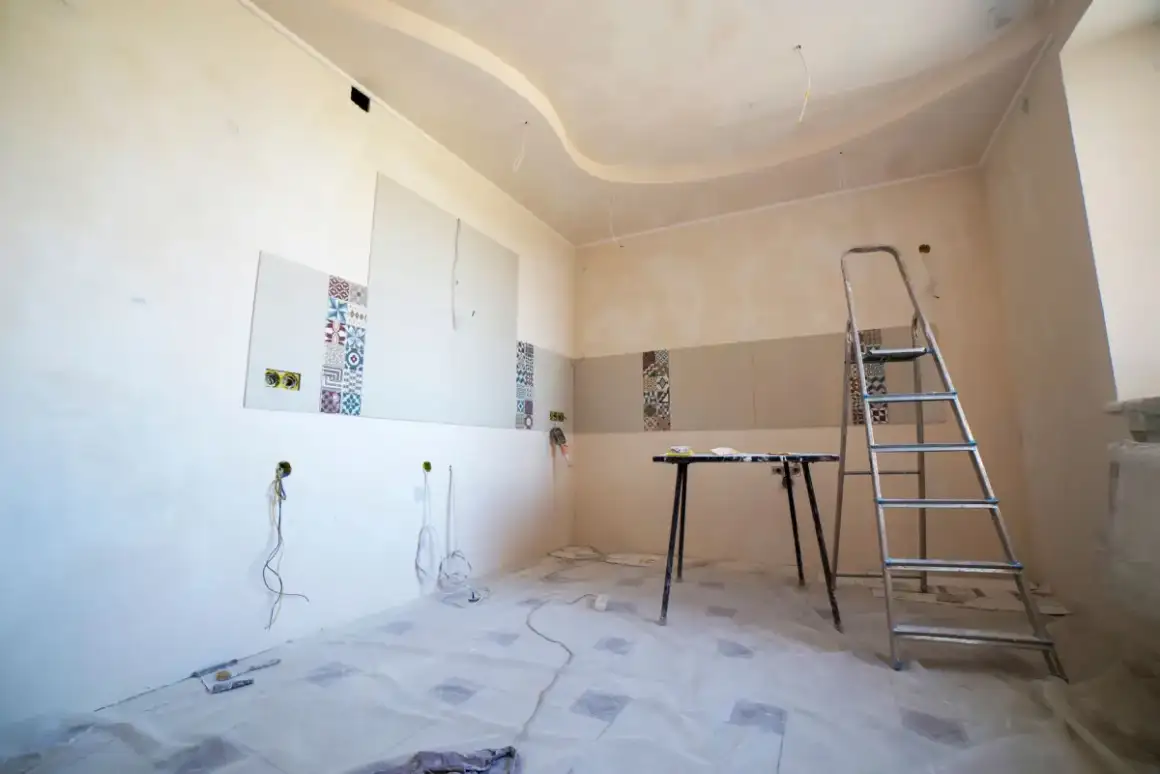
Ceiling Crack Repair
Cracks along taped seams, across the wall-to-ceiling corner, and running perpendicular to the joists. Seam cracks mean the tape beneath has let go and get cut out and re-taped rather than filled. Corner cracks between ceiling and wall are typically two planes moving against each other seasonally, which in this climate is common and recurring — that is the one case where a flexible treatment genuinely outperforms rigid compound, because filled hard it simply reopens on the same line next winter.
Sagging Drywall Ceiling Repair
Board that has dished between joists, visible as a shallow wave when you sight along the ceiling from a doorway rather than looking straight up at it. Causes are half-inch board on 24-inch spacing, fasteners that have lost their grip in dried framing, or load from above — stored material, or insulation that took on water. Sag is the symptom that most often turns out to need reboarding rather than repair, because gypsum that has taken a set does not return flat: refastening pulls the panel tight but the deflection stays in it.
Ceiling Hole & Patch Repair
Openings from removed light fittings, ceiling fans, speakers, access cuts made by other trades, and impact from above. Ceiling patches need backing without exception — there is nothing but gravity working against them otherwise, and compound alone will not hold a panel overhead. The opening is squared, backing fastened through the existing board, and the new piece bears on that. Then finishing and texture, where the match matters more than anywhere else in the house because of how a ceiling is lit.
Loose & Damaged Ceiling Drywall
Board that has separated from the joists without cracking through — it gives when pressed, sounds hollow, and fastener heads may show as faint circles. This is the stage before visible sag, and catching it here is far cheaper than catching it after. New fasteners are driven into solid framing to pull the panel back tight and the failed ones are reset or removed, then the area is finished over. In older Madison housing it is worth confirming the ceiling is drywall at all before starting, since loose plaster presents almost identically from below and is repaired completely differently.
When a Ceiling Needs Replacing Instead of Repairing
The threshold question, and often the honest answer is replacement. A ceiling that has taken a permanent set, one where cracks have returned across several repairs, or half-inch board spanning 24-inch joists across a large room will keep failing no matter how well each repair is executed. Because ceilings are judged in flat light, a fully reboarded ceiling also finishes visibly better than a heavily patched one. Where that is the right call, the work is covered on the drywall replacement page — this page exists to help you tell which side of the line you are on.
Signs You Need Ceiling Drywall Repair
- A crack following a seam, or along the ceiling-to-wall corner
- A shallow dip visible when you sight along the ceiling from a doorway
- Faint circles or flaking spots in rows following the joists
- The ceiling gives or sounds hollow when pressed
- An opening left where a fixture, fan or speaker was removed
- Repairs to the same ceiling area that have already been done more than once
How Ceiling Drywall Repair Works
- 1
Look Above It First
A ceiling problem originates on the other side of the ceiling, so that is where the inspection starts. Where there is attic or floor-above access, the cavity gets examined: joist direction and spacing, whether insulation is dry, whether anything is stored on the framing, and any sign of past or present moisture. From below, the board is pressed and sounded to map how far the failure runs — nearly always wider than the visible crack. Board thickness is confirmed too, because half-inch panel on 24-inch centers is a span problem that no repair resolves, and knowing that before quoting changes the recommendation entirely.
- 2
Pull It Back or Take It Out
Board that is intact but loose is drawn back to the framing with new fasteners set into solid joists, placed an inch or two from the failed ones rather than into the same holes. The old fasteners are backed out or set below the surface. Board that has taken a permanent set, crumbles at its edges, or has been affected by moisture comes out instead, cut back to the center of a joist so the replacement bears on both sides. Where an opening spans between joists, backing is fastened through the existing board first — a ceiling patch with nothing behind it is held by compound alone, and compound does not hold anything overhead.
- 3
Coat It, and Feather Further Than You Would on a Wall
Joints between new and existing material are taped and bedded, and failed tape in cracks is replaced rather than covered. Then fill and finish coats, each wider than the last — and on a ceiling, wider than a wall would need, often a foot or more beyond the repair. The reason is the lighting: even diffuse overhead light finds a transition that a side-lit wall would conceal completely. Drying between coats cannot be shortened, and Madison's summer humidity slows it. Compound coated over material still holding moisture shrinks unevenly, and on a ceiling that reads as a shadow rather than a hidden flaw.
- 4
Match the Texture Overhead, Then Prime
Existing ceiling texture is reproduced on a scrap panel first and compared against the ceiling with a light held at a low angle, adjusting thinning and pressure between samples until it reads the same. Only then does it go up. Ceilings sprayed in the 1960s and 70s are the difficult case, since neither the products nor the equipment survive — where a match will not land, skimming the entire ceiling flat produces a better outcome and is recommended before an attempt rather than after a failed one. The repair is primed before painting, because bare compound absorbs differently and will flash as a visible patch under any sheen.
What Does Ceiling Drywall Repair Cost in Madison, WI?
- Ceiling height and whether staging is needed to reach it
- The mapped size of the failed area, not the size of the visible damage
- Whether board can be refastened or has to come out and be replaced
- Texture type and age, since older sprayed finishes take more sampling
- Board thickness, if a span problem means moving to 5/8-inch
- Room contents, since ceiling work affects the entire floor area below
| Service | Cost Per Sq. Ft. | Typical Job |
|---|---|---|
| New Drywall Installation | $1.50 – $3.00 per sq. ft. | $1,000 – $3,254 per project |
| Small Patch or Hole | $75 – $350 per patch | $300 – $500 for a contractor visit |
| Larger Wall Repair | $500 – $800+ per patch | Scales with how much board comes out |
| Ceiling Repair | $297 – $472 per hole | $220 – $1,300 for the full ceiling |
| Water-Damaged Drywall | $500 – $2,500+ | Depends how far the moisture travelled |
| Texture Matching | $150 – $450 per patch | Runs 30 – 40% above a smooth finish |
Based on 2026 national cost-guide data from Angi, HomeGuide, and Homewyse. Madison and Dane County rates land above or below these ranges depending on ceiling height, access, texture type, and how much board has to come out before new board goes back. Texture matching is the row that moves most often here, since so much of the local housing stock already has a sprayed finish to match into. You get a firm number after someone sees the job.
Guides put a basic ceiling hole repair at roughly $297 to $472 per patch, and full ceiling drywall repair anywhere from about $220 to $1,300, with textured work 30 to 40% above smooth. Ceilings land at the upper end more often than walls do for reasons that have nothing to do with the drywall itself: everything below has to be moved or covered, work happens overhead from staging, and the result is judged under the least forgiving light in the house. The single biggest variable is whether the ceiling can be refastened or has to be reboarded.
What to Look for in a Madison Ceiling Repair Contractor
They Get Into the Space Above
The cause of a ceiling problem is almost never in the room you are standing in. Someone who looks into the attic or floor cavity, or explains why they cannot, is diagnosing rather than guessing.
They Sight the Ceiling From the Doorway
Deflection is invisible from directly underneath and obvious from an angle. That ten-second check is what separates a recommendation to repair from a recommendation to reboard.
They Confirm Board Thickness and Joist Spacing
Half-inch board on 24-inch centers will keep sagging whatever is done to it. Knowing that before quoting is the difference between an honest recommendation and a repair that comes back.
Protection Covers the Whole Room
Ceiling work drops dust and debris across an entire floor area rather than just beneath the repair. Full floor cover should be assumed rather than negotiated after the fact.
Residential & Commercial Ceiling Drywall Repair
Residential
Residential ceiling repair in Madison is mostly seam and corner cracking driven by seasonal movement, fastener pops in the newer housing stock, and openings left by fixture changes. It happens over furniture and flooring that need protecting or moving, and the texture match is what the homeowner ends up judging the work by.
Commercial
Commercial ceiling repair covers corridor and office ceilings in occupied space, often around suspended grid or where a fixture change has left an opening. Work is scheduled after hours or in sections, and where the ceiling forms part of a rated assembly the repair restores that rating rather than simply closing the hole.
When Ceiling Drywall Repair Isn’t the Right Call
- A single small hole where a smoke detector or hook came out. That is a patch kit and half an hour.
- A ceiling that is actively dripping or wet. The source gets fixed and the cavity dries first — see the water-damaged drywall page.
- Popcorn ceilings in a pre-1980s home where you want the texture gone rather than repaired. That is its own service and begins with asbestos testing.
- Plaster ceilings where the failure is broken keys behind the lath. Related work, entirely different method — see the plaster repair page.
- Addresses outside Madison and Dane County.
Frequently Asked Questions
- Why is my ceiling sagging between the joists?
- Most commonly half-inch board spanning joists at 24-inch centers. Gypsum creeps under its own weight over decades and once it has taken a set it does not go back flat. Other causes are fasteners losing grip as framing lumber dries, or weight from above — stored items, or insulation that has been wet. Refastening pulls a panel tight but leaves the deflection in it, which is why meaningful sag usually points to reboarding in 5/8-inch rather than repairing.
- Is a crack in my ceiling serious?
- Usually not structural. A crack following a seam means the tape failed. A crack at the ceiling-to-wall corner is normally two planes moving seasonally, which is very common in Dane County given the soils and frost depth here. What warrants closer attention is a crack that is widening over time, one accompanied by sag, or one with any staining — those point beyond the drywall and are worth investigating before cosmetic repair.
- Can you match my existing ceiling texture?
- Usually, and it is always sampled on scrap and compared under raking light before anything goes overhead. Modern orange peel and knockdown match well. Textures sprayed in the 1960s and 70s are the hard case because the products and equipment no longer exist, and in flat ceiling light a near-match reads as a mismatch. Where that is the situation, skimming the whole ceiling smooth generally looks better than a patch that never disappears.
- Do I need to empty the room?
- Everything needs to be moved out or fully covered, because ceiling work drops dust and debris across the entire floor rather than only under the repair. Light furniture normally leaves, heavier items get centerd and sheeted. Worth agreeing at the walkthrough, since clearing a room is part of the job's real duration rather than something that happens instantly on the morning.
- How can I tell whether my ceiling is drywall or plaster?
- Press a thumbtack into an inconspicuous area — drywall takes it easily, plaster resists and chips. Plaster also sounds denser when tapped. It matters because plaster fails by losing its keys behind the lath, which presents as a small crack from below but usually means a much larger loose area, and the repair method has almost nothing in common with drywall work.
- There's a stain on my ceiling. Is that this service?
- Eventually, but not first. A stain means water reached the board, and drywall work is the last step rather than the first. The source has to be found and fixed and the cavity has to dry — closing a ceiling over damp framing or wet insulation hides the problem instead of solving it. Once everything is genuinely dry, the repair proceeds as described here.
Learn More
- Gypsum Association GA-214 — the finish-level standard, and why ceilings in flat light are judged against its higher levels
- US EPA — Asbestos — what applies before disturbing any textured ceiling in a pre-1980s home
- City of Madison — Flooding and Groundwater — local soil and groundwater conditions behind seasonal movement in Dane County buildings
Need Ceiling Drywall Repair in Madison, WI?
Tell us what’s going on and get an on-site estimate — no charge for the visit, and no obligation to book the work.
Get My Free Estimate