Plaster Repair in Madison, WI — Residential & Commercial Plaster Wall and Ceiling Specialists
Cracked, sagging and loose plaster repaired across Madison and Dane County. Plaster is the exception here rather than the rule, which is exactly why it needs someone who treats it as its own trade.
Plaster Repair in Madison, WI
Madison Elite Drywall is your local resource for plaster repair throughout Madison and Dane County. We work with experienced professionals who re-key loose plaster, patch failing sections and blend plaster into drywall in older Madison homes.
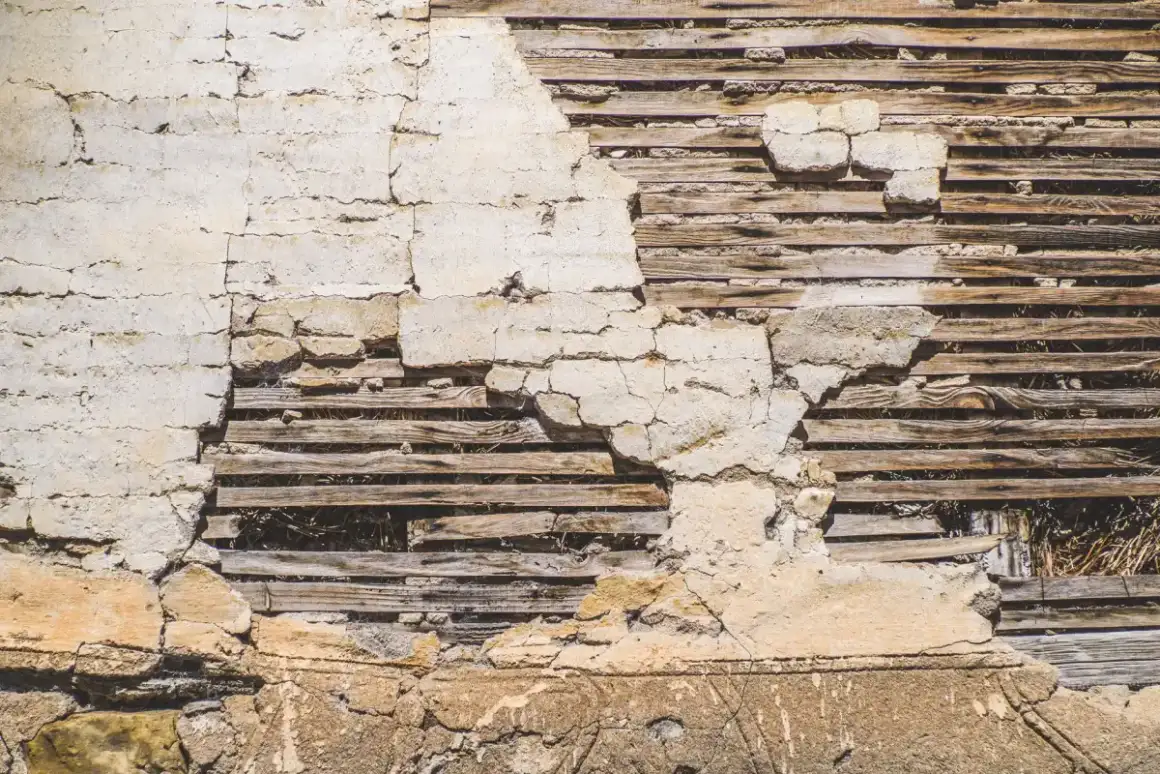
Plaster does not fail the way drywall fails, and treating it as though it does is how a repair comes undone. It was applied wet in coats over wood lath — thin horizontal strips nailed across the studs — and as the base coat was pushed on it squeezed through the gaps and hardened behind them. Those hardened lumps are keys, and they are the only thing holding the wall to the building.
When keys break, plaster separates from the lath while looking entirely intact from the room. That is the fact that governs everything about this work, and it is why a plaster estimate so often exceeds what the visible damage suggests. A hairline crack is usually just where a much larger loose area finally announced itself.
Madison makes this a minority wall type. Only about 13% of local housing predates 1940, with another 4% from the 1940s — a young stock compared with older Wisconsin cities. Plaster concentrates in the near east side around Williamson Street and Tenney-Lapham, in the older blocks near downtown, and in scattered pre-war housing elsewhere. That scarcity is the practical problem: plenty of contractors here rarely encounter it, and a plaster wall repaired with drywall habits fails.
What’s Included in a Madison Plaster Repair Quote
- The loose area mapped by hand and by sound rather than assumed from the crack
- Keys assessed — whether plaster has left the lath, or lath has left the framing
- Plaster washers set into the lath to draw sound plaster back tight
- Failed and crumbling material removed back to something firmly keyed
- Acrylic bonding agent applied so new material grips old plaster
- Voids and washer heads packed with setting plaster, not drywall compound
- The whole mapped area skimmed to one continuous plane
- Surface checked with a long knife under raking light before it is called done
Plaster Wall & Ceiling Repair in Madison, WI
Cracked Plaster Repair
Two categories, and telling them apart decides the repair. Fine surface crazing in the finish coat is cosmetic and skims out. Structural cracks — diagonally from door and window corners, or in long lines across a wall — mean movement, and filling them guarantees they return on the same line. Those get raked open, bridged with tape or mesh bedded in setting compound, and skimmed. In Dane County, where clay soils and a four-foot frost line put a seasonal cycle into every foundation, a crack that reopens each spring is reporting building movement rather than a failed repair.
Plaster Wall Patching
Holes and missing sections from removed fixtures, old plumbing chases, or plaster that has crumbled away. Where the lath behind is intact, the patch is built in coats much as the original was — a base packed into and through the lath to form new keys, then a finish coat brought level with the surrounding wall. Where lath is broken too, it gets replaced, or board is fitted to match the plaster's thickness before skimming over. That thickness match matters: plaster walls are usually thicker than half-inch board, and a patch set at the wrong depth reads as a shadow permanently.
Plaster Ceiling Repair
The urgent category, because a plaster ceiling that has lost its keys is heavy and held by very little. Sagging, a bulge, or a section that moves under pressure all indicate key failure across an area much larger than any crack suggests. Repair means washers driven into the lath — sometimes through lath into the joists — starting at the perimeter of the loose zone and spiralling inward to draw it back gradually. Ceilings are also where the honest replace-versus-repair conversation happens most, since a plaster ceiling that has partly detached is rarely worth chasing across a whole room.
Loose & Damaged Plaster Repair
Plaster still whole but no longer attached — it flexes under palm pressure, sounds hollow when tapped, or shows a slight bulge along a raking light. This is the stage before a section comes down, and catching it here is dramatically cheaper. Plaster washers with coarse screws are driven into the lath, never into plaster alone, starting around the edges of the loose area and working inward at roughly eight to ten inch spacing. Each gets snugged rather than driven home, then revisited — pulling one tight in a single pass cracks the plaster around it, which is how an amateur repair enlarges the problem.
Plaster-to-Drywall Repairs
Where new board meets original plaster, which in Madison happens most often when a near-east-side house is renovated or extended. The materials differ in thickness and move differently, so butting them and taping like an ordinary drywall seam produces a ridge that paint accentuates rather than hides. The correct approach brings the board out to the plaster's plane with furring or a backing coat, then skims across the transition wide enough that no edge is detectable. Handled that way the change of material disappears. Handled as a standard seam, it marks the renovation line permanently.
Signs You Need Plaster Repair
- A wall or ceiling that flexes or sounds hollow when pressed
- Cracks running diagonally from door or window corners
- A visible bulge or sag when sighting along the surface under raking light
- Plaster dust or grit appearing on the floor with no obvious source
- A patch that keeps failing because it was repaired with drywall compound
- New board meeting old plaster with a visible ridge at the transition
How Plaster Repair Works
- 1
Map the Loose Area by Sound
The first task is establishing true extent, because on plaster the visible damage is almost never the boundary. The surface is pressed with a flat palm and tapped across a wide area around the damage, listening for the change from the solid ring of keyed plaster to the hollow note of plaster that has let go. That boundary is marked on the wall and is routinely several times the size of the crack that prompted the call. Ceilings get the same treatment plus a sight-line check from the doorway. This is why a plaster estimate follows an inspection rather than a phone call, and it is the step that stops a repair being done twice.
- 2
Re-Key With Washers Into the Lath
Sound plaster that has separated from its lath is drawn back rather than removed. Plaster washers — flat perforated discs — are set with coarse screws that must catch the lath itself, not just plaster, and on ceilings sometimes reach through lath into the joists. Placement starts at the perimeter of the mapped area and spirals inward at roughly eight to ten inch centers. Each washer is snugged only partway, then the next, then back around again, because bringing the plaster up gradually distributes the load. Driving one home in a single pass cracks the plaster around it and enlarges the failure.
- 3
Remove the Unsalvageable, Then Bond
Material that is crumbling, water damaged, or too far gone to draw back comes off, cut to a clean edge where the remaining plaster is firmly keyed. Loose debris is cleared from between the lath strips, since anything left there prevents new material forming keys of its own. The exposed area and surrounding edges are then coated with acrylic bonding agent, which is what allows new material to grip old plaster — a step with no drywall equivalent, and a common reason plaster patches release later. Where lath itself is broken it gets replaced or backed before anything goes over it.
- 4
Pack, Skim the Whole Area, and Check
Setting plaster is packed into voids and over washer heads, built in coats rather than one thick application, and worked through the lath where new keys are needed. Then the entire mapped area — not merely the repaired part — is skimmed with finish plaster or lightweight compound to bring it to one continuous plane, because skimming only the patch leaves a detectable island. The surface is checked by drawing a long knife across it and by holding a light at a low angle, which finds the dishes and high spots ordinary room light conceals. Existing texture is matched, then the repair is primed.
What Does Plaster Repair Cost in Madison, WI?
- The true mapped size of the loose area, not the visible crack
- Whether plaster can be re-keyed or has to be removed and rebuilt
- Ceiling versus wall, since ceiling plaster is heavier, riskier and slower
- Condition of the lath, only fully known once material is off
- Number of coats needed to rebuild an area to original thickness
- Whether existing texture or a decorative profile has to be matched
- Access and protection in an occupied older home
| Service | Cost Per Sq. Ft. | Typical Job |
|---|---|---|
| New Drywall Installation | $1.50 – $3.00 per sq. ft. | $1,000 – $3,254 per project |
| Small Patch or Hole | $75 – $350 per patch | $300 – $500 for a contractor visit |
| Larger Wall Repair | $500 – $800+ per patch | Scales with how much board comes out |
| Ceiling Repair | $297 – $472 per hole | $220 – $1,300 for the full ceiling |
| Water-Damaged Drywall | $500 – $2,500+ | Depends how far the moisture travelled |
| Texture Matching | $150 – $450 per patch | Runs 30 – 40% above a smooth finish |
Based on 2026 national cost-guide data from Angi, HomeGuide, and Homewyse. Madison and Dane County rates land above or below these ranges depending on ceiling height, access, texture type, and how much board has to come out before new board goes back. Texture matching is the row that moves most often here, since so much of the local housing stock already has a sprayed finish to match into. You get a firm number after someone sees the job.
Plaster is priced by the mapped area rather than the visible damage, which is why a plaster estimate often lands well above what a homeowner expected from looking at a crack. The offsetting fact is that re-keying sound plaster with washers costs far less than removing and reboarding, and preserves a surface harder and better at deadening sound than anything that would replace it. The largest uncertainty is the lath, whose condition only becomes fully visible once material comes off — a good estimate says so rather than presenting one confident figure.
What to Look for in a Madison Plaster Repair Contractor
They Have Actually Worked on Plaster
It is a minority wall type in Dane County, so plenty of local contractors rarely meet it. Asking directly how often they work on plaster is a fair question here in a way it would not be in an older city.
They Sound the Wall Before Quoting
Pressing and tapping around the damage to find where solid plaster ends is the entire diagnostic. A quote based on the size of the crack has measured the symptom rather than the problem.
They Re-Key Before They Rebuild
Sound plaster that has only lost its grip can be drawn back with washers for a fraction of removal cost. Someone reaching straight for demolition is selling the bigger job.
They Skim the Whole Mapped Area
Skimming only the repaired section leaves an island that shows under raking light. Bringing the full area to one plane is what makes a plaster repair actually disappear.
Residential & Commercial Plaster Repair
Residential
Residential plaster work in Madison concentrates on the near east side and the older blocks near downtown — the pre-war housing where original plaster is still on the wall. Much of it is re-keying rather than rebuilding, and much of the rest is blending new board into old plaster during a renovation, which is where the transition detail decides the outcome.
Commercial
Commercial plaster repair appears in older converted buildings and in the historic properties near the Capitol and along the isthmus, where the original wall system remains and is sometimes part of what the building is valued for. Work is staged around occupancy, and where a decorative profile or original finish is involved the right recommendation is often a dedicated plaster restoration specialist.
When Plaster Repair Isn’t the Right Call
- Ornamental plaster restoration — running cornice, medallions, matching original decorative profiles. That is a specialist craft worth hiring directly.
- Walls you have confirmed are drywall, which in Madison is the clear majority. Press a thumbtack somewhere hidden: if it goes in easily, this is not your page.
- A plaster ceiling actively sagging over an occupied room. Keep people out from underneath and treat it as urgent rather than routine.
- Anyone wanting the cheapest possible fill of a recurring crack. If it has reopened twice, filling it a third time buys the same disappointment.
- Addresses outside Madison and Dane County.
Frequently Asked Questions
- Is plaster common in Madison homes?
- Less common than in older Wisconsin cities. Only about 13% of Madison's housing predates 1940 and another 4% dates from the 1940s, so most local walls are drywall. Plaster concentrates in the near east side around Williamson Street and Tenney-Lapham and in the older blocks near downtown. That relative scarcity is worth knowing when hiring, because it means many local contractors encounter plaster rarely.
- How do I know whether I have plaster or drywall?
- Push a thumbtack into an inconspicuous spot. Drywall accepts it with light pressure; plaster resists and often chips. Plaster also sounds denser when tapped and is noticeably thicker at a window return or electrical box. Age is the strongest predictor — pre-1940 construction in Madison is very likely plaster, and anything from the 1960s onward almost certainly is not.
- Why was the estimate so much bigger than the crack?
- Because on plaster the crack is where a larger problem became visible rather than the size of it. Plaster is held to lath by keys, and when those break the plaster separates while still looking intact. Pressing and sounding the wall reveals the true loose area, commonly several times the visible damage. Pricing only the crack would mean coming back.
- Should I replace my plaster with drywall?
- Usually not, if the plaster is still keyed. It is harder than drywall, better at deadening sound, and often flatter than new board would be. Re-keying loose sections with washers costs far less than tearing out and reboarding. Replacement makes sense where keys have failed across a large area, where the lath has gone, or where a renovation is opening the wall anyway.
- Can I fill plaster cracks with drywall compound?
- For fine surface crazing, a skim of compound is fine. For anything structural it will not hold — compound has no strength across a moving joint and no bond into old plaster without a bonding agent, so it releases or the crack reopens on the same line. Setting-type materials plus a bonding agent are what the repair needs, which is why so many previously filled cracks in older Madison houses are open again.
- How do you join new drywall to existing plaster?
- By bringing both surfaces into one plane before finishing rather than butting and taping. Plaster is typically thicker than half-inch board, so the board is furred out or built up with a backing coat until faces align, then the transition is skimmed wide enough that no edge can be felt or seen. Treated as an ordinary drywall seam, that joint reads permanently as the line where the renovation stopped.
Learn More
- GSA — Re-securing Loose Wall or Ceiling Plaster — the federal technical procedure for re-keying loose plaster with washers
- National Park Service — Preservation Briefs — guidance on repairing rather than replacing historic interior finishes
- City of Madison — Flooding and Groundwater — the local soil and groundwater conditions behind seasonal movement in older buildings
Need Plaster Repair in Madison, WI?
Tell us what’s going on and get an on-site estimate — no charge for the visit, and no obligation to book the work.
Get My Free Estimate