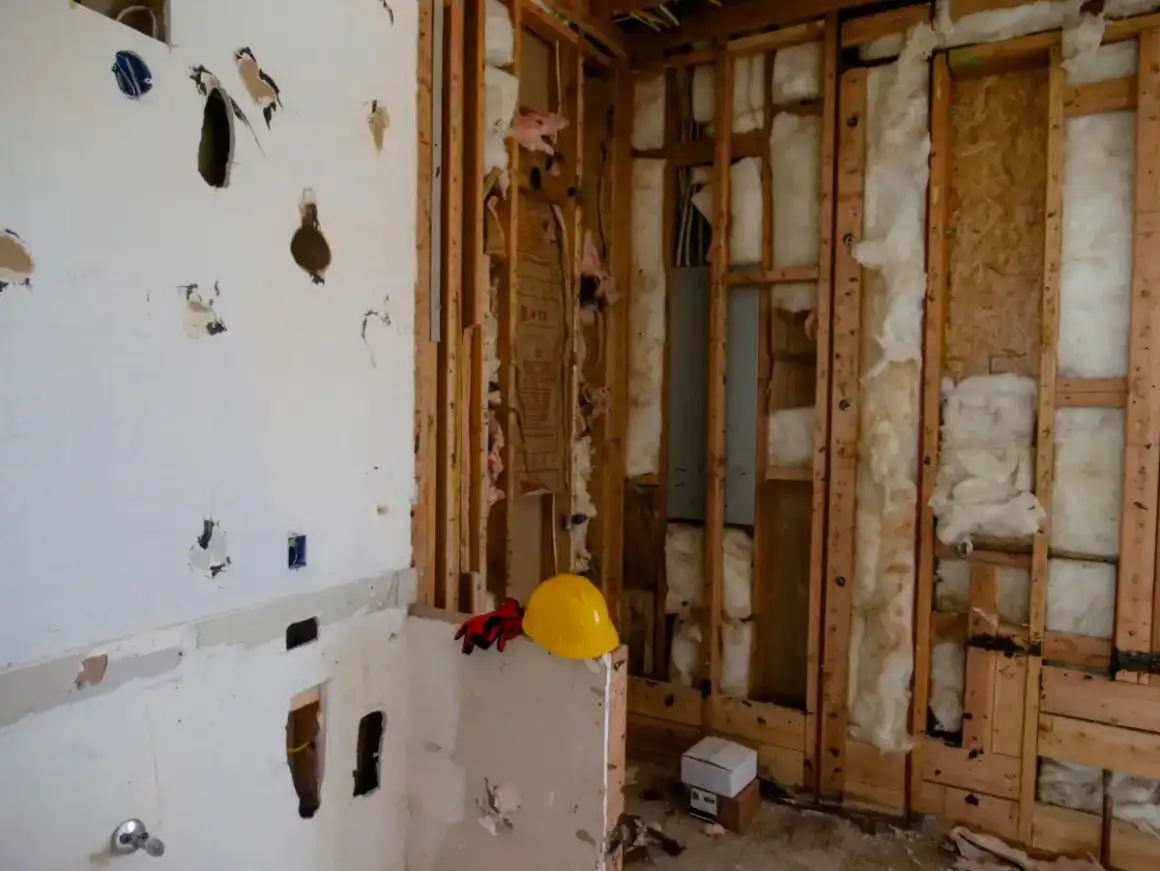
Water-Damaged Drywall Repair in Madison, WI — Residential & Commercial Water Damage Drywall Specialists
Board removed, replaced and refinished after a leak, backup or groundwater event has been stopped and the cavity dried. Gypsum draws water well past the stain, so finding the real edge comes first.
Water-Damaged Drywall Repair in Madison, WI
Madison Elite Drywall is your local resource for water-damaged drywall repair throughout Madison and Dane County. We work with experienced drywall professionals who remove compromised board and refinish once a space is genuinely dry.
Water-damaged drywall is different from other damage because the evidence understates it. Gypsum is porous and wicks moisture upward and sideways through the panel, so the stain marks where water became visible, not where it stopped travelling. Cutting at the stain line is the most common error in this work and the usual reason a repair has to be done twice.
Madison's version of this problem is largely groundwater rather than surface flooding. The city documents groundwater flooding in filled-wetland areas of the isthmus after several wet seasons stack up, and it arrives through the slab and the base of the wall rather than through an obvious crack. Add clay and silt soils that hold water against foundations and a four-foot frost line, and a finished lower level near Lake Monona or Wingra Creek is where it shows.
Sequence matters more here than anywhere else in the trade. Source fixed, cavity dried, then board. Drywall is the last trade in, and compressing that order is how a visible problem becomes a hidden one.
What’s Included in a Madison Water-Damaged Drywall Repair Quote
- Moisture mapped with a meter beyond the visible staining to find the true edge
- Cut lines set deliberately above the wick line rather than at the mark
- Trim and baseboard removed, since water tracks behind them and stays
- Wet insulation pulled — it holds moisture long after board feels dry
- Framing checked for rot, warping and older water tracking while open
- Cavity dried with air movement and verified on a meter, not by hand
- Moisture-resistant board where the location has already proven it can get wet
- Stain-blocking primer over any area that carried tannin staining
Water-Damaged Drywall Repair in Madison, WI
Water-Damaged Wall Repair
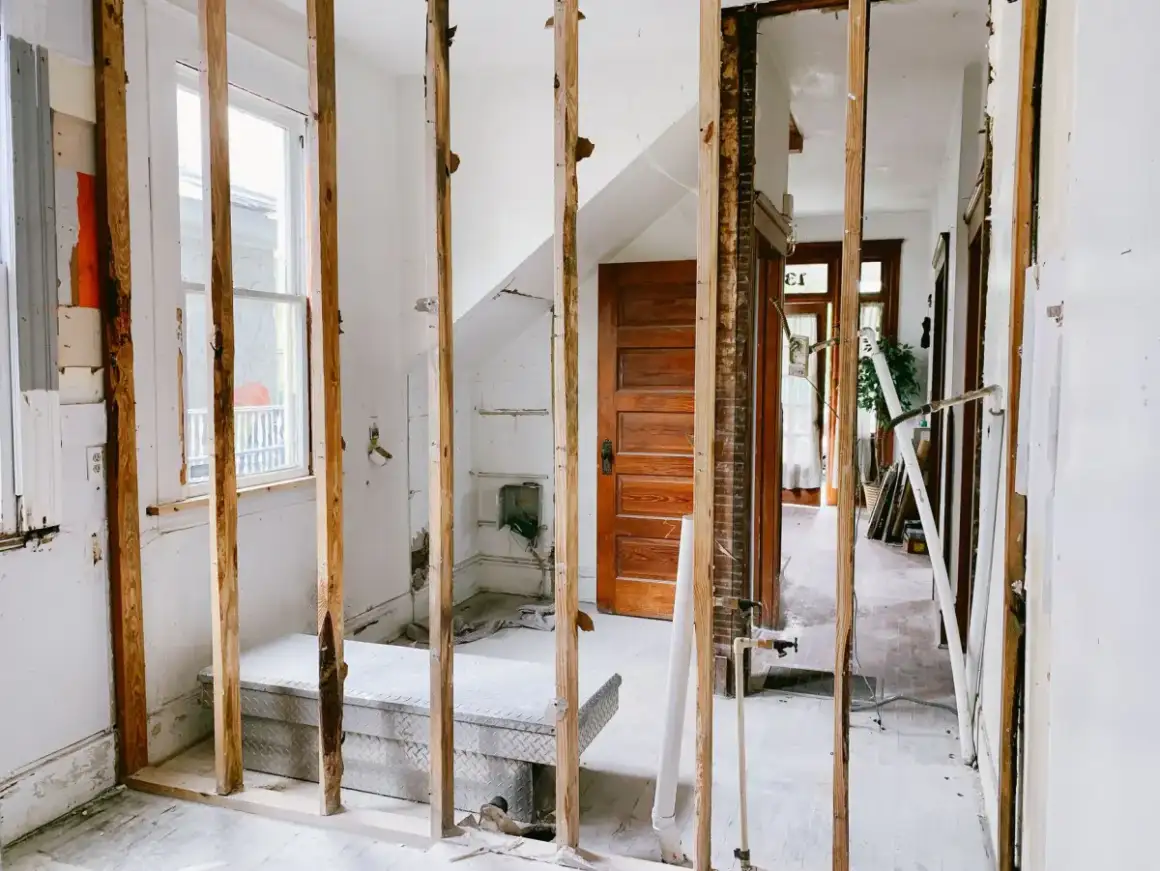
Walls that took water from a supply line, an appliance, a backed-up drain, or groundwater arriving at floor level. Wall damage runs upward from the bottom plate rather than down, which surprises people — two inches of water on a floor routinely means twelve to sixteen inches of compromised board above it. The repair is normally a horizontal cut set well above the wick line, replacement of the lower section, and a taped seam feathered across the transition. Baseboard comes off first, because water tracks behind trim and hides there indefinitely.
Water-Damaged Ceiling Repair
Ceilings stained or softened by water from above — a failed supply line, an overflowing fixture on the floor above, or roof intrusion. Ceilings are the more urgent case, because saturated board overhead is heavy and can release without much warning. Location is diagnostic: staining under a bathroom or kitchen points at plumbing, staining tracking along the outside edge of a ceiling points at the roof or eave. Wet insulation above the board is the part most often missed and will keep the assembly damp long after the drywall feels dry.
Damaged Drywall Removal
Getting compromised material out cleanly, which is its own stage rather than a preliminary. Board is cut back to the center of a stud or joist so the replacement has bearing, cut lines are set above the moisture rather than at the stain, and material is bagged out rather than carried through the house shedding wet gypsum. Where board has been wet for a while it comes away with the fasteners rather than tearing the paper and leaving the core behind, and any damp insulation behind it is removed at the same time.
Drywall Replacement After Water Damage
New board hung once the cavity reads dry on a meter rather than dry to the hand. Panel choice is part of the repair rather than a default: moisture-resistant board is right below grade and anywhere that has already demonstrated it can get wet, and going back with standard panel in a basement that has taken groundwater once simply resets the clock. Framing gets checked while open, because water that reached the board also reached the studs, and warped or softened framing has to be dealt with before anything closes.
Drywall Finishing After Water Damage
Taping, coating and texturing the new work back into the surrounding surface. The wrinkle specific to water damage is staining: tannins and residue from the original event bleed through fresh compound and paint months later as a faint brown ghost of the old mark. A shellac- or oil-based stain-blocking primer seals that before finishing. Texture is then matched to the adjacent surface — which in Madison almost always means matching a sprayed finish — and the repaired area is primed so it does not flash against older paint.
Signs You Need Water-Damaged Drywall Repair
- Brown or yellow staining on a wall or ceiling, with or without a visible drip
- Board that feels soft, spongy or crumbly when pressed
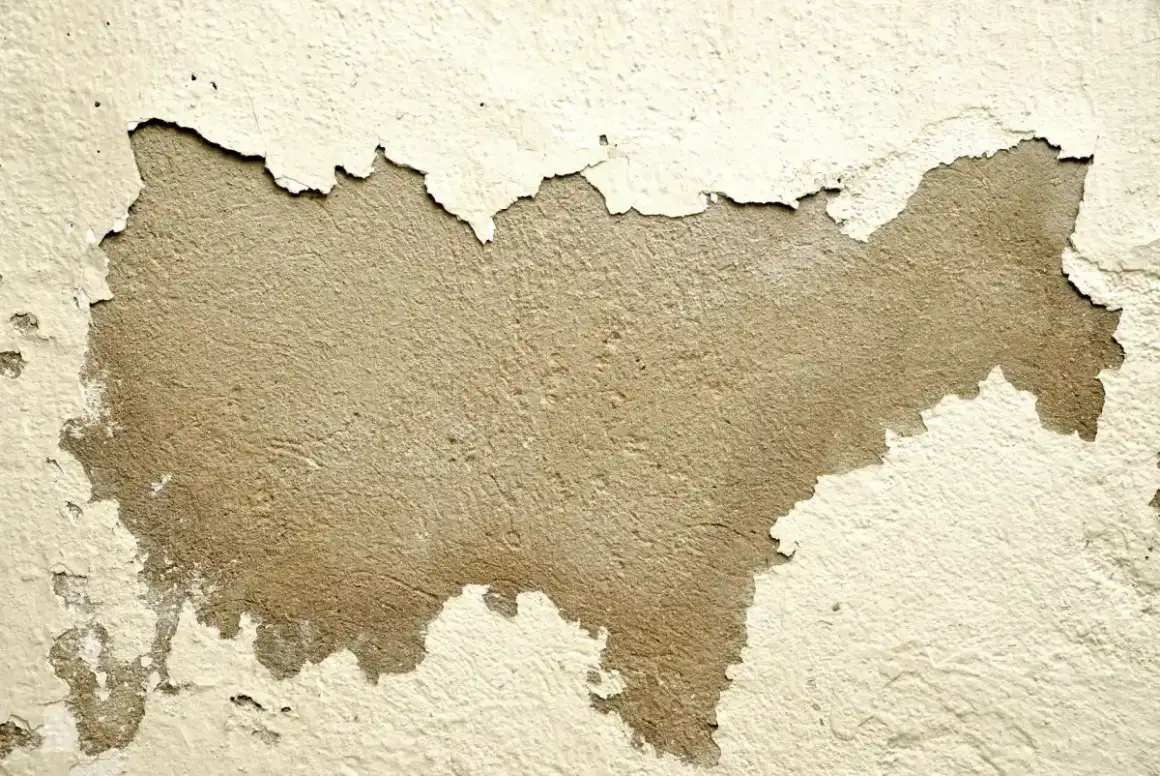
- Paint bubbling, blistering or peeling in a defined patch
- Baseboard separating from the wall or swelling along its lower edge
- A musty smell in a lower-level room with nothing visibly wrong
- Any finished basement surface after groundwater or a backup has been in the space
How Water-Damaged Drywall Repair Works
- 1
Confirm the Source Is Resolved and the Space Is Drying
Nothing starts while water is still arriving. Plumbing, roofing or foundation work comes first and it is a different trade — this is where homeowners most often want to compress a schedule and where it genuinely cannot be compressed. Once the source is dealt with, the space has to actually dry, meaning air movement and dehumidification across days rather than hours, verified with a moisture meter rather than by touch. Closing a wall over damp framing traps moisture where nobody can see it, which is how a repair becomes a mould problem eighteen months later — and in Dane County, where groundwater is often seasonal rather than a one-off event, that matters even more.
- 2
Map the Real Extent With a Meter
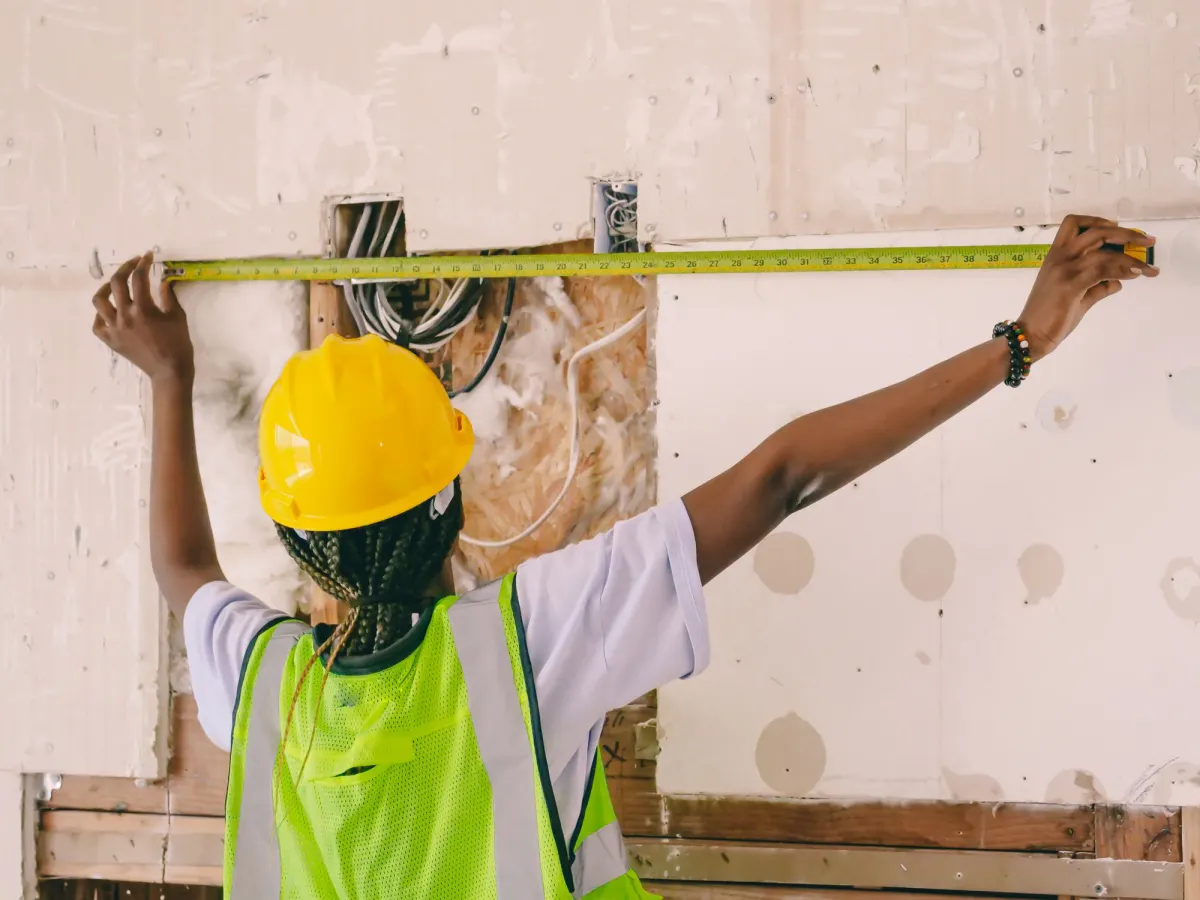
The damaged zone is mapped with a moisture meter rather than by eye, because gypsum wicks and the stain only marks where water surfaced. On walls the failed area typically runs well above any visible line. Trim and baseboard come off, since water tracks behind them and sits. On ceilings the search extends upward: insulation is checked by hand because it holds water long after board reads dry. Cut lines are then set above and beyond the mapped edge, deliberately removing more than looks necessary — which is the single decision that most reliably prevents a second repair.
- 3
Remove, Open Up, and Wait for Dry
Compromised board is cut back to the center of framing members so replacement bears on both sides, and taken out in sections rather than torn, which keeps wet gypsum from shedding through the house. Wet insulation goes with it. With the cavity open, framing is inspected for rot, warping and older water tracking that predates this event — in isthmus properties it is not unusual to find evidence of previous groundwater nobody mentioned. Then the cavity dries with air moving across it until a meter confirms it. This is the stage where nothing appears to be happening and it is the stage that determines whether the repair lasts.
- 4
Reboard, Seal the Stain, and Finish
New board goes up, chosen for the location rather than by habit — moisture-resistant panel below grade and anywhere that has flooded once. Seams are taped and bedded, then filled and feathered wide across the transition into existing board. Before finish coats take paint, any area that carried staining gets a shellac- or oil-based stain-blocking primer, because water-borne tannins bleed through latex and reappear as a brown ghost months later. Texture is matched from a scrap sample to the surrounding surface, and the finished area is primed so it does not flash against the older paint around it.
What Does Water-Damaged Drywall Repair Cost in Madison, WI?
- How far moisture travelled, which sets the real area rather than the size of the stain
- Whether insulation behind the board is wet and has to come out
- Ceiling versus wall, since overhead work is slower and saturated board is heavy
- Drying time required before reboarding, which extends the schedule not the labor
- Whether framing shows rot or warping needing attention while open
- Moisture-resistant board where the location warrants it
- Stain-blocking primer over areas that carried tannin staining
| Service | Cost Per Sq. Ft. | Typical Job |
|---|---|---|
| New Drywall Installation | $1.50 – $3.00 per sq. ft. | $1,000 – $3,254 per project |
| Small Patch or Hole | $75 – $350 per patch | $300 – $500 for a contractor visit |
| Larger Wall Repair | $500 – $800+ per patch | Scales with how much board comes out |
| Ceiling Repair | $297 – $472 per hole | $220 – $1,300 for the full ceiling |
| Water-Damaged Drywall | $500 – $2,500+ | Depends how far the moisture travelled |
| Texture Matching | $150 – $450 per patch | Runs 30 – 40% above a smooth finish |
Based on 2026 national cost-guide data from Angi, HomeGuide, and Homewyse. Madison and Dane County rates land above or below these ranges depending on ceiling height, access, texture type, and how much board has to come out before new board goes back. Texture matching is the row that moves most often here, since so much of the local housing stock already has a sprayed finish to match into. You get a firm number after someone sees the job.
Guides put water-damaged drywall between roughly $500 and $2,500 or more, the widest range of any drywall service — and the width is honest rather than evasive, because nobody knows the real scope until the wall is open. What a good estimate can do is state the mapped extent, name what would expand it, and be clear that drying time sits in the schedule regardless. This is also frequently an insurance matter, and documenting the extent with photographs and meter readings before demolition is worth doing for that reason alone.
What to Look for in a Madison Water Damage Drywall Contractor
They Bring a Meter, Not Just a Hand
Dry to the touch and dry through are different states. Deciding readiness by feel is guessing at the one variable that determines whether the repair holds.
They Cut Above the Stain, and Explain Why
Cutting at the visible mark is the classic error, because gypsum wicks past it. Someone who explains why the cut line sits higher than the damage looks has done this work before.
They Ask Whether It Has Happened Before
On the isthmus, groundwater tends to be seasonal rather than singular. A contractor who asks about previous events is thinking about whether this repair will survive the next wet spring.
They Name What Is Not Their Trade
Plumbing, roofing, foundation work and mould remediation are separate specialties. Willingness to say drywall has to wait for another trade protects the work rather than the booking.
Residential & Commercial Water-Damaged Drywall Repair
Residential
Residential water damage in Madison comes from plumbing failures, appliance overflows, and — distinctively for this city — groundwater in lower levels, particularly in the filled-wetland areas of the isthmus after a run of wet seasons. Finished basements are the common casualty, usually because standard board was installed below grade where it never belonged.
Commercial
Commercial water damage means space that cannot close and a landlord, tenant or insurer who needs extent documented. Work is staged so part of the floor stays usable, damage is recorded before demolition for the claim, and where a wall carries a fire or sound rating the assembly is put back to specification rather than just resurfaced.
When Water-Damaged Drywall Repair Isn’t the Right Call
- An active leak. Until the source is fixed, drywall work seals the problem inside a new wall — plumber, roofer or foundation contractor first.
- Visible mould across a significant area. That is a remediation specialty with its own protocols, and drywall follows it rather than covering it.
- A ceiling sagging and heavy with water right now. Keep people out from underneath and treat the source as urgent.
- Damp that returns every spring with no plumbing cause. That is groundwater and drainage, and reboarding will not outlast the next wet season.
- Addresses outside Madison and Dane County.
Frequently Asked Questions
- How much drywall has to come out after water damage?
- More than the stain shows, essentially always. Gypsum wicks moisture upward and sideways, so the compromised area extends past the visible mark by an amount depending on how long the water sat. A shallow event at floor level routinely means twelve to sixteen inches of board above it. The extent gets mapped with a meter and the cut line is set deliberately above that, because cutting at the stain is what makes a repair fail.
- How long does the wall need to dry before it can be closed?
- Until a moisture meter says so, not until it feels dry. Typically days rather than hours with air movement and dehumidification running, and longer where insulation was involved or the water sat. It is the least satisfying stage because nothing appears to be happening, and it is the one that determines whether the repair is permanent.
- Can water-damaged drywall be dried out and saved?
- Sometimes, if exposure was brief and clean and the board is still firm. Board that is soft, spongy, crumbling or visibly swollen has lost its integrity and will not recover — saturated gypsum does not return to its original strength. Board contaminated by sewage or standing groundwater comes out regardless of appearance, because the problem is what is in it rather than what it is doing.
- Will the stain come back through my new paint?
- It can, and that is what stain-blocking primer prevents. Tannins and residue from the original event bleed through standard latex over weeks or months and reappear as a faint brown ghost. A shellac- or oil-based primer over the affected area seals it before finishing. It is a small step, it gets skipped often, and its absence usually surfaces long after the invoice.
- My basement gets damp most springs. Is repair worth it?
- Repairing the drywall without addressing the cause is not worth it, and that answer is worth hearing plainly. Recurring seasonal damp in Dane County usually means groundwater and drainage rather than a discrete leak, and the city itself documents groundwater flooding in filled-wetland areas of the isthmus. Fix the water path first, then finish below grade with moisture-resistant board and the bottom edge held off the slab.
- Is this covered by insurance?
- That is between you and your insurer, and it commonly turns on whether the water was sudden and accidental rather than gradual seepage, and whether flood coverage applies separately. What helps in every case is documentation — photographs and moisture readings taken before any demolition. Worth capturing first, because once the wall is open the evidence of the original extent is gone.
Learn More
- US EPA — Mold Course, Moisture and Building Materials — how gypsum behaves when wet and how long materials must dry before being closed up
- City of Madison — Flooding and Groundwater — the city's own guidance on groundwater flooding and basement water in Madison
- Gypsum Association GA-214 — the finish-level standard replacement board is taken to before paint
Need Water-Damaged Drywall Repair in Madison, WI?
Tell us what’s going on and get an on-site estimate — no charge for the visit, and no obligation to book the work.
Get My Free Estimate