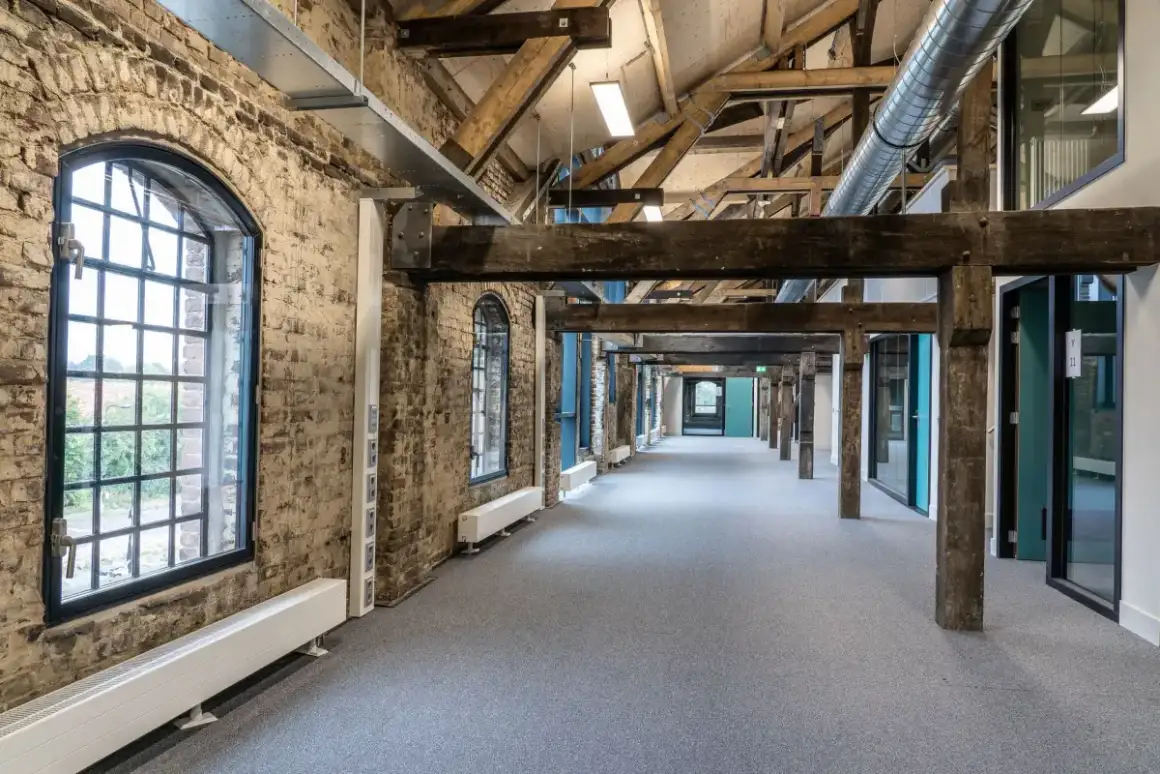
Commercial Drywall Repair in Madison, WI — Commercial Drywall Repair for Occupied Offices, Labs and Storefronts
Wall and ceiling damage repaired across Madison and Dane County in buildings that cannot shut down — state offices, research and clinical space, and State Street retail. Staged around the calendar the building actually runs on.
Commercial Drywall Repair in Madison, WI
Madison Elite Drywall is your local resource for commercial drywall repair throughout Madison and Dane County. We work with experienced commercial drywall professionals who repair damage inside working buildings without stopping what those buildings do.
Madison's commercial building stock is not a normal mix. Alongside the offices and storefronts any city has, this one runs a state government campus, a research university, and the clinical and biotech space that grew up around both. That changes commercial drywall repair in a specific way: a meaningful share of the walls here are doing something beyond holding up paint, and the repair has to know which ones.
A partition in a research building may carry lead shielding behind the board. A corridor in clinical space sits under infection-control rules that govern how the work is contained before anyone opens a wall. A wall between two tenancies downtown may be rated, acoustically specified, or both. None of that is visible from the damaged side, which is why the first move on any commercial repair here is establishing what the wall is before deciding how to fix it.
The second Madison-specific factor is the calendar. Campus-adjacent buildings have real scheduling windows — semester breaks, between-session gaps — and work that could take three disruptive weeks in October takes one uninterrupted week in January. Planning around that is usually worth more than shaving the hourly rate.
What’s Included in a Madison Commercial Drywall Repair Quote
- Wall identified as rated, acoustic, shielded or standard before any board is opened
- Containment set to the standard the space requires, including clinical work areas
- Work scheduled to the building's real windows — after hours, overnight or term break
- Damaged board cut back square with backing added so the patch bears properly
- Rated assemblies rebuilt with matching board type, layer count and offset joints
- Shielding, blocking and acoustic material reinstated where the repair disturbed it
- Existing texture and finish level matched to the building standard already in place
- Impact-resistant board or wall protection proposed where damage keeps recurring
Commercial Drywall Repair in Madison, WI
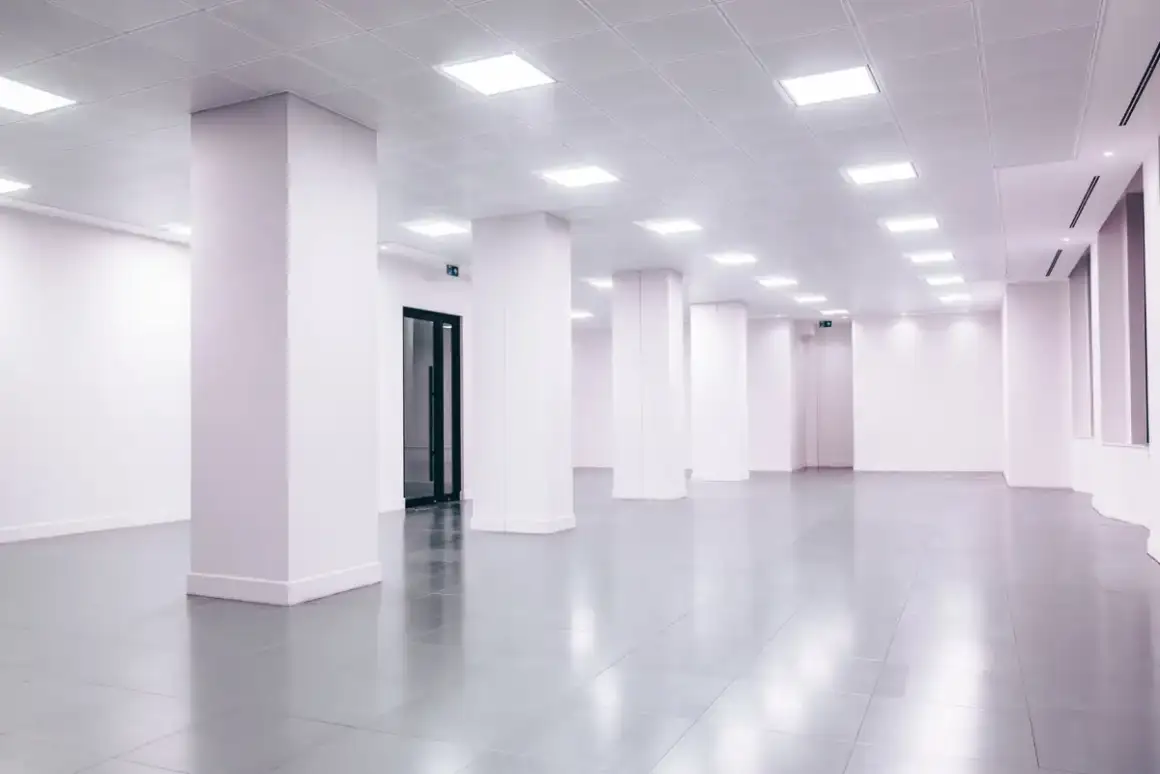
Office Drywall Repair
Partition, corridor and reception damage in working offices, including the older state-owned buildings around the Capitol Square where the construction is rarely what a drawing suggests. The causes are unremarkable — desks moved, monitors and whiteboards pulled off walls, equipment relocated during a reorganization. The complication is that many of these buildings have been reconfigured repeatedly across decades, so a partition may have been rated in one layout and cut into during another. Checking rather than assuming is what separates a repair from an inherited problem.
Retail & Storefront Drywall Repair
State Street, Monroe Street and the neighborhood retail corridors, where the buildings are frequently older, the tenant spaces are narrow, and access runs through the sales floor. Damage concentrates where stock moves and fixtures mount, and the same locations fail repeatedly. Deadlines here are tied to trading hours and seasonal resets rather than to construction schedules, so the practical question is usually how much can be finished inside one closed night.
High-Traffic Wall Damage Repair
Corridors, service routes and loading areas where carts, trolleys and equipment pass a wall every day. The damage has a signature: a horizontal band of dents at cart height, corner beads crushed or exposed, and scuffing that no longer cleans off. In the research and clinical buildings that make up a large share of Madison's commercial stock, that traffic includes equipment carts heavy enough to do real structural damage to standard board. Repairing the surface without addressing the cause books the same call next year.
Commercial Ceiling Drywall Repair
Ceiling openings left by mechanical, sprinkler and lighting work, leaks from a floor above, and access cuts other trades did not close. Commercial ceilings are frequently part of a rated assembly, in which case the opening has to be closed with the correct board and detail rather than simply covered. In lab and clinical space a ceiling may also carry a sealed or cleanable finish that the repair has to reinstate, which is a specification question rather than a cosmetic one.
Commercial Drywall Patching & Replacement
The judgment call about when patching stops being the right answer. In commercial space that threshold arrives sooner than in a house, because these buildings light large flat surfaces evenly and continuously, which shows every accumulated repair. A corridor wall carrying six patches usually looks better and costs less over its remaining life replaced between structural breaks than patched a seventh time — and where the wall is rated or shielded, replacing a full section is often cleaner than reinstating the assembly around a series of small openings.
Signs You Need Commercial Drywall Repair
- A wall opened by another trade and left for someone else to close
- Corridor damage at cart height recurring in the same place each year
- Anchor and bracket damage after equipment or casework was relocated
- A repair in clinical or lab space that needs the original surface specification back
- Crushed or exposed corner beads on high-traffic corners
- Patches that have accumulated to the point the wall reads uneven under the lighting
How Commercial Drywall Repair Works
- 1
Establish What the Wall Is Doing
Every commercial repair starts by identifying the assembly, and in Madison that question has more possible answers than in most markets. The wall may be rated, acoustically specified, lead-shielded, sealed for cleanability, or entirely ordinary. Drawings settle it where they exist. Where they do not, the construction itself is read: board type stamped on the panel, layer count, whether the wall runs to the underside of the deck or stops at the grid, and what is present in the cavity. Buildings that have been reconfigured across decades — which describes much of the state and campus stock — frequently contain assemblies that no current drawing reflects, so what is actually there governs.
- 2
Set Containment to the Space's Own Standard
Containment is scope in commercial work, not overhead, and the required standard varies sharply by space. An office corridor needs dust kept out of adjoining tenancies and a protected route for material and debris. Clinical space runs to infection-control requirements that specify sealing, air handling and debris removal, and those are established before the first cut. Lab space may add its own constraints around what can be disturbed and when. Getting this wrong does not produce a slightly messier job — it produces a stopped job.
- 3
Rebuild the Assembly, Then Match the Surface
Damaged material is cut back to square edges with backing added so the new board has bearing rather than floating on tape. Where the wall was rated, the replacement matches board type and layer count, second-layer joints offset from the first, and any firestopping disturbed at a penetration is reinstated as detailed. Shielding, acoustic infill and blocking go back where the repair removed them. Only then does the finish work start: the existing texture is reproduced on scrap first, and the finish level is matched to the building standard already present rather than defaulted to whatever the repairer normally runs.
- 4
Clear It Completely Before Handover
Compound dust travels much further than the work zone and settles on desks, equipment and stock that were never near the repair. Cleaning stops well past the containment line for that reason. Protection comes down, access routes are cleaned, and debris leaves the building rather than waiting in a corner. The repair is primed so it does not flash against surrounding paint under continuous even lighting. Where a recurring cause was identified — a corner that fails annually, a corridor taking daily cart impact — that recommendation goes in writing to the facilities contact, not mentioned to whoever happened to be on site that night.
What Does Commercial Drywall Repair Cost in Madison, WI?
- What the wall is — rated, acoustic, shielded and sealed assemblies all cost more to rebuild
- Containment standard required, with clinical space the most demanding
- Scheduling window, since overnight and after-hours work carries a premium
- Number of repairs in one visit, as batching drops cost per repair sharply
- Ceiling versus wall work and the access equipment needed
- Texture and finish-level matching to an existing building standard
- Whether impact-resistant board or protection is added at the same time
| Service | Cost Per Sq. Ft. | Typical Job |
|---|---|---|
| New Drywall Installation | $1.50 – $3.00 per sq. ft. | $1,000 – $3,254 per project |
| Small Patch or Hole | $75 – $350 per patch | $300 – $500 for a contractor visit |
| Larger Wall Repair | $500 – $800+ per patch | Scales with how much board comes out |
| Ceiling Repair | $297 – $472 per hole | $220 – $1,300 for the full ceiling |
| Water-Damaged Drywall | $500 – $2,500+ | Depends how far the moisture travelled |
| Texture Matching | $150 – $450 per patch | Runs 30 – 40% above a smooth finish |
Based on 2026 national cost-guide data from Angi, HomeGuide, and Homewyse. Madison and Dane County rates land above or below these ranges depending on ceiling height, access, texture type, and how much board has to come out before new board goes back. Texture matching is the row that moves most often here, since so much of the local housing stock already has a sprayed finish to match into. You get a firm number after someone sees the job.
Commercial repair pricing here tracks access, timing and assembly type far more than damage size. The same six-inch hole costs one figure in an empty office at noon and a substantially different one overnight inside a clinical corridor with containment requirements attached. The two levers that actually move the number are batching and timing: a facilities list handled in a single visit costs a fraction of the same repairs called out individually, and campus-adjacent work scheduled into a term break avoids paying the premium for working around occupancy entirely.
What to Look for in a Madison Commercial Drywall Repair Contractor
They Ask What the Wall Is Before Quoting
In a market with this much lab, clinical and state building stock, a contractor who quotes a patch without establishing the assembly is quoting a different job than the one that exists.
They Understand Containment as Scope
Clinical and research space set the containment standard before the trade work starts. Treating that as an afterthought is how a job gets shut down on the first night.
They Plan Around Your Real Calendar
Campus and state buildings have genuine scheduling windows. Someone who asks about term breaks and session gaps before proposing dates is planning the job rather than just booking it.
They Name the Cause of Recurring Damage
The same corridor failing every year is not a drywall problem. A contractor who proposes impact-resistant board or a protection rail is trying to end it rather than bill it annually.
Residential & Commercial Commercial Drywall Repair
Residential
Residential repair is a different job and is covered on the drywall repair page. No rated or shielded assemblies to reinstate, no containment standard set by anyone but the homeowner, and no building calendar to work around. The techniques overlap; almost none of the constraints do.
Commercial
Commercial repair here is defined by two things at once: the building stays in use, and the wall often has a specification behind it. Work is contained to whatever standard the space requires, scheduled into real operating windows, rebuilt so any rating, shielding or acoustic performance survives the repair, and matched to the finish standard already in the building.
When Commercial Drywall Repair Isn’t the Right Call
- Single small repairs in a house. The commercial premium on containment and scheduling buys nothing at a residential hallway dent.
- Rated or shielded walls where the preference is a cosmetic patch to save money. The assembly is either restored or it is not.
- Recurring impact damage where the cause is not to be addressed. Repairing the same corridor annually is a legitimate choice, but worth making deliberately.
- Commercial ceilings with an active leak above them. The source gets fixed and the cavity dries before any board goes back.
- Buildings outside Madison and Dane County.
Frequently Asked Questions
- Can you work inside a clinic or healthcare office?
- Yes, provided the containment requirements are established first rather than discovered mid-job. Healthcare environments govern how a work area is sealed, how air is managed and how debris leaves the building, and those rules apply from the moment a wall is opened. Practically it means containment goes up before any cutting, the work happens in defined windows outside clinic hours, and finishes are usually specified smooth and cleanable rather than textured. It is more scope than an office repair, and it should be priced that way rather than discounted into the same number.
- How do I know if a wall in a research building is shielded?
- Documentation is the reliable answer, and in research and imaging space it usually exists. Where it does not, the physical clues are readable — shielded partitions are noticeably heavier, the lead sheet sits behind the board rather than within it, and fastener patterns often differ. If there is any question, the correct approach is to treat it as shielded until confirmed otherwise, because shielding continuity is the whole point of the assembly and a patch that interrupts it defeats a system the rest of the room depends on.
- Should we wait for a semester break to do this work?
- For campus-adjacent buildings, very often yes. Work that has to be phased around occupancy in October can frequently run continuously in January, and continuous work is both faster and cheaper than the same scope broken into after-hours segments with a fresh containment setup each time. The trade-off is that break windows are short and heavily booked, so scheduling into one means committing early. For genuinely urgent damage, or anything affecting a rated assembly, waiting is not the right call.
- Will a repair match the walls around it?
- Matching is the part that takes the time, and Madison's commercial stock makes it harder than average in one specific way: these buildings light large flat surfaces evenly and continuously. That lighting shows a texture mismatch or a finish-level difference far more readily than the varied light in a house. The existing texture is sampled and reproduced on scrap before anything goes on the wall, the finish level is matched to what is already there, and the repair is primed so it does not flash under the building's own lighting.
- Can you handle a list of repairs across an entire building?
- That is by a wide margin the cheapest way to buy this work. Twenty accumulated repairs handled in one visit share one round of containment, one mobilization and one disruption to the building, and the cost per repair lands well below what individual call-outs produce. For a facilities manager, the single-disruption part is often worth more than the money saved.
- How soon can the space be used after a repair?
- Small patching is frequently usable the same night, with the caveat that texture and paint need drying time, so a wall closed overnight may not be paintable until the next day. Larger sections follow the ordinary constraint of drying between compound coats, which cannot be compressed by adding people. Any schedule promising a fully finished and painted wall within a few hours is describing work that will crack or flash once the building's lighting is back on.
Learn More
- UL Product iQ — the listed assembly database for confirming what a rated wall has to be rebuilt to
- Gypsum Association GA-214 — the finish-level standard used to match a repair to an existing building standard
- Association of the Wall and Ceiling Industry — the trade association covering commercial wall and ceiling practice
Need Commercial Drywall Repair in Madison, WI?
Tell us what’s going on and get an on-site estimate — no charge for the visit, and no obligation to book the work.
Get My Free Estimate