Drywall Repair in Madison, WI — Residential & Commercial Drywall Repair Specialists
Localized damage fixed without opening a whole wall across Madison and Dane County — holes, cracks, popped fasteners, dents and torn face paper, textured to match and primed.
Drywall Repair in Madison, WI
Madison Elite Drywall is your local resource for drywall repair throughout Madison and Dane County. We work with experienced drywall professionals who patch, texture and blend damaged board in Madison homes and commercial spaces.
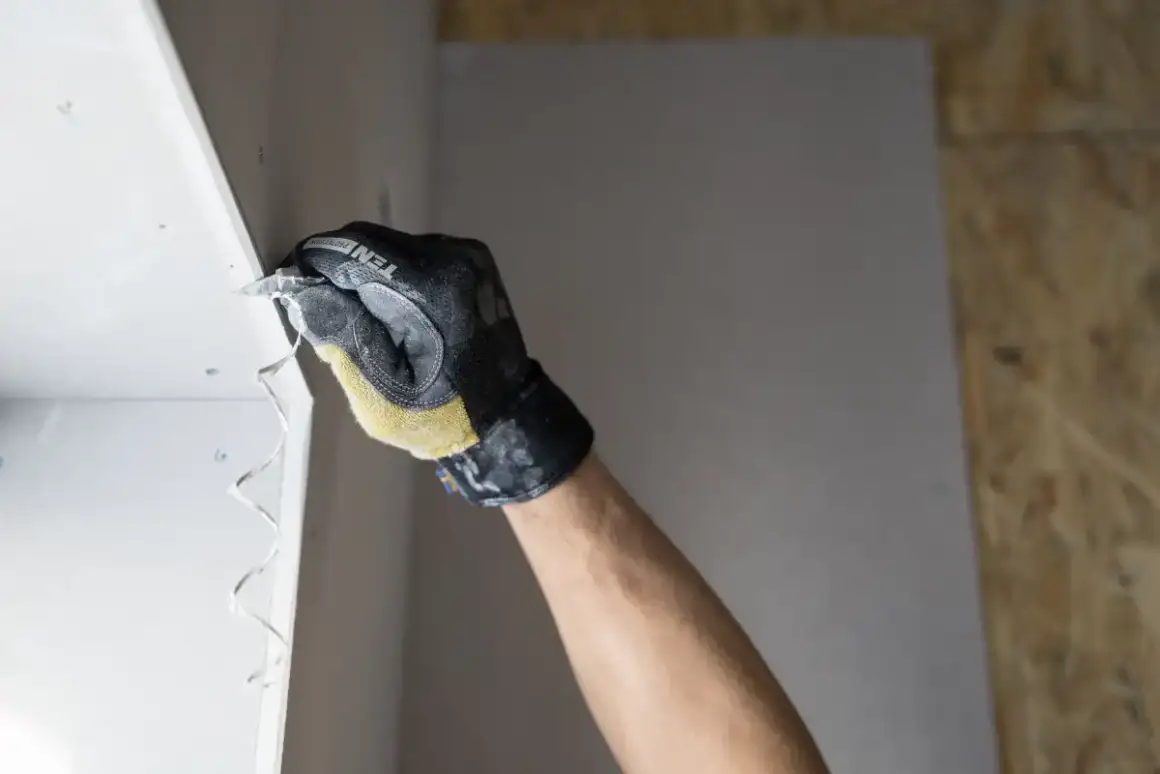
Repair means fixing damage while leaving the rest of the wall alone. A hole behind a door handle, a seam that has opened over a doorway, a line of fastener heads pushing through paint — all localized, all better handled by repairing the affected area and blending it back into the surrounding surface than by reboarding a room.
In Madison the blend is almost always a texture match, and that is the part that decides whether a repair is invisible. Because so much of Dane County's housing was built in the drywall era — median construction year 1980, only about 13% predating 1940 — the walls here overwhelmingly carry a sprayed finish rather than smooth plaster. Patching the hole is the easy half. Reproducing the texture around it closely enough that the eye cannot find the boundary is the skill.
There is a second Madison-specific pattern worth naming. Cracks that reopen in the same place each spring are usually not a drywall failure at all. Dane County's clay and silt soils swell and shrink seasonally and the frost line runs to four feet, so foundations cycle slightly every year. Filling that crack a third time treats a symptom, and it is worth saying so out loud rather than quietly booking the same repair annually.
What’s Included in a Madison Drywall Repair Quote
- Cause established before method — impact, fastener failure, or seasonal movement
- Openings cut back square and backed so the patch bears on something solid
- Failed tape cut out of cracks and replaced, not covered over
- Loose fasteners reset into solid framing rather than refilled in place
- Torn face paper sealed before compound touches it, so the gypsum does not bubble
- Existing texture sampled and test-sprayed on scrap before it reaches the wall
- Compound feathered well beyond the repair so no edge is detectable
- Repair primed so it does not flash against the surrounding paint
Drywall Repair Services in Madison, WI
Drywall Hole Repair & Patching
Damage that goes through the board: door handles, furniture corners, a misjudged step through a hallway wall, and the openings other trades leave behind. Under about four inches, a mesh or setting-compound patch handles it. Larger than that, the opening is cut back to a clean rectangle and backing is fastened behind the existing board so the new piece bears on something solid rather than floating on old paper. The test is simple — if a finished patch flexes under thumb pressure, it will crack around its edges within a year regardless of how well it was coated.
Drywall Crack Repair
Cracks along taped seams, above door and window openings, and where walls meet ceilings. The repair cuts the failed tape out and re-tapes rather than filling the line, because compound has no tensile strength across a joint and the crack returns on exactly the same line otherwise. In Dane County the follow-up question matters as much as the method: a crack that reopens each spring is tracking seasonal foundation movement through shrink-swell clay, and that is worth diagnosing after the second repair rather than the fifth.
Nail Pop & Screw Pop Repair
Fastener heads working out through the finish as small round bumps or flaking circles, typically in rows following a stud or joist. The mechanism is framing lumber drying and shrinking away from the board, which is why they cluster in the first heating seasons of newer construction — and Dane County has a great deal of newer construction. Refilling over the head guarantees a repeat. The durable fix drives a fresh fastener an inch or two away into solid framing to pull the panel tight, resets or removes the original, and finishes over both.
Torn Drywall Paper Repair
Face paper pulled away without the gypsum core breaking — most often from stripping wallpaper, removing adhesive hooks, or pulling tape off a wall that was never primed. Exposed core is porous and bubbles the instant wet compound or paint reaches it, so the torn area is sealed with an oil- or shellac-based primer before anything else happens, then skimmed flat and re-textured. Skipping that seal is the reason a stripped wallpaper wall so often looks worse after painting than it did before.
Dent & Gouge Repair
Surface damage that dishes or scrapes without penetrating — furniture pushed against a wall, vacuum corners, chair backs in a dining room, cart damage in a commercial corridor. Being shallow makes them deceptive: overfilling leaves a proud bulge that catches light worse than the original dent. They get filled in thin passes and feathered wide, and in a room where a window rakes light down the wall, skimming the full surface is sometimes the better-looking answer than chasing individual dents.
Signs You Need Drywall Repair
- A hole from a door handle, furniture move, or appliance delivery
- The same crack reopening above the same doorway every spring
- Rows of round bumps or flaking circles tracking a stud line
- Bare grey or brown gypsum where face paper has torn away
- Dents and scrapes along a hallway or behind frequently moved furniture
- A previous patch that shows under afternoon light despite being painted
How Drywall Repair Works
- 1
Work Out Why, Before Working Out How
Size is the least useful thing about a piece of drywall damage. What matters is what caused it, because that determines whether a repair will hold. Impact damage is self-evident and can be fixed immediately. A crack following a taped seam means the tape underneath failed. A crack that returns seasonally in the same location is tracking building movement, which in Dane County usually means clay soils cycling under the foundation and a four-foot frost line doing its annual work. Fastener pops mean framing has dried and shrunk. Staining means water, and drywall work waits. Skipping this step is the single most reliable way to do the same repair twice.
- 2
Cut Back Until What Is Left Is Sound
Damaged material comes out until the remaining board is solid. For a hole that means squaring the opening rather than working with a ragged edge, because a rectangle is far easier to make disappear than an irregular shape. Where the opening spans between studs, backing is fastened behind the existing board so the new piece has something to hold. Failed tape is cut out of cracks rather than coated over. Crumbling edges come away too — anything that moves under thumb pressure will telegraph through the finish however carefully the compound is applied over it.
- 3
Fill in Thin Passes and Feather Wide
New board is fitted and fastened, or setting compound builds up the smaller openings. Tape is bedded over every joint between new and existing material. Then the coats go on — thin, and each one wider than the last, so the buildup tapers out across the surrounding wall with no edge for the eye to catch. Three thin coats with genuine drying between them beat one thick coat every time, and the difference between a repair that disappears and one that reads as a slightly raised rectangle forever is almost entirely patience at this stage rather than skill.
- 4
Match the Texture on Scrap, Then Prime
Because most Madison walls carry a sprayed texture, this is where the repair is won or lost. The existing finish is examined for grain size and coverage density, then reproduced on a scrap panel and held up against the wall under a light at a low angle. Compound thinning and spray pressure get adjusted between samples until one reads as the same surface. Only then does anything touch the repair, and the new texture is feathered into the surrounding area rather than stopped at the patch boundary. Finally it is primed, because bare compound absorbs paint faster than the wall around it and will flash as a visible patch under any sheen.
What Does Drywall Repair Cost in Madison, WI?
- Number and size of repairs, since batching several into one visit lowers the cost of each
- Whether damage penetrates the board or only dishes the surface
- Texture type and age, since matching runs 30-40% above a smooth finish
- Ceiling versus wall, as overhead work is slower and less forgiving
- Whether an underlying cause needs addressing before repair is worthwhile
- Protection and containment required in a furnished, occupied room
| Service | Cost Per Sq. Ft. | Typical Job |
|---|---|---|
| New Drywall Installation | $1.50 – $3.00 per sq. ft. | $1,000 – $3,254 per project |
| Small Patch or Hole | $75 – $350 per patch | $300 – $500 for a contractor visit |
| Larger Wall Repair | $500 – $800+ per patch | Scales with how much board comes out |
| Ceiling Repair | $297 – $472 per hole | $220 – $1,300 for the full ceiling |
| Water-Damaged Drywall | $500 – $2,500+ | Depends how far the moisture travelled |
| Texture Matching | $150 – $450 per patch | Runs 30 – 40% above a smooth finish |
Based on 2026 national cost-guide data from Angi, HomeGuide, and Homewyse. Madison and Dane County rates land above or below these ranges depending on ceiling height, access, texture type, and how much board has to come out before new board goes back. Texture matching is the row that moves most often here, since so much of the local housing stock already has a sprayed finish to match into. You get a firm number after someone sees the job.
Cost guides put a professional patch at roughly $300 to $500 for small damage and $500 to $800 or more once new board goes in, with textured repairs running 30 to 40% above smooth. The figure those ranges hide is the minimum call-out. One nail hole is not a $300 problem, but nor is it worth a contractor's drive across Dane County — which is why a house that has accumulated a list of small damage is far better served by one batched visit than by several separate ones.
What to Look for in a Madison Drywall Repair Contractor
They Diagnose a Returning Crack Rather Than Refilling It
A crack that comes back every spring is tracking seasonal foundation movement, not failing compound. Someone who says that plainly is worth more than someone who bills for the same repair annually.
Texture Gets Sampled on Scrap First
Nearly every Madison wall has a sprayed finish. Matching it means iterating samples against the wall under raking light — spraying straight onto the repair means the trial runs happen on the surface you are paying to fix.
Torn Paper Gets Sealed Before It Gets Coated
Compound over exposed gypsum core bubbles. Sealing with a shellac or oil primer first is a small step that is skipped constantly, and its absence shows up after the painting is done.
They Batch Small Repairs Into One Visit
The economics of drywall repair are dominated by the call-out, not the patch. A contractor who suggests collecting your list rather than coming out twice is telling you how they price.
Residential & Commercial Drywall Repair
Residential
Residential repair in Madison is usually a list rather than one item — the hallway dent, the crack over the bedroom door, the anchor holes from a shelf that came down. Handling them together means one round of dust and one texture-matching setup instead of several, and in an occupied house that convenience is often worth more than the money saved.
Commercial
Commercial repair covers corridor and common-area damage in spaces that stay open: cart strikes, door impacts, scuffed corners on circulation routes. Work is staged after hours or in sections, and the finish is matched to whatever building standard is already in place rather than to a fresh specification.
When Drywall Repair Isn’t the Right Call
- A single nail hole or anchor pull-out. Spackle, a putty knife and a sanding sponge will do a genuinely good job for a few dollars.
- A wall patched so many times it no longer sits flat. Past that point replacement gives a better wall for less than another repair — see the drywall replacement page.
- Active water damage. Until the source is fixed and the cavity is dry, drywall work seals the problem inside the wall.
- A crack you want filled again without anyone asking why it keeps returning. If it has reopened twice, the answer may involve the foundation rather than the drywall.
- Addresses outside Madison and Dane County.
Frequently Asked Questions
- Why does the same crack keep coming back every spring?
- Because the building is moving seasonally and the drywall is showing it. Dane County sits on clay and silt soils that expand when wet and shrink when dry, and the frost line runs to about four feet, so foundations cycle slightly through every freeze and thaw. Filling the crack treats the surface. After the second return it is worth asking whether the joint needs a flexible treatment, or whether the movement itself deserves attention, rather than repeating the same repair each year.
- Can a drywall repair be made completely invisible?
- On a smooth wall, usually. On a textured wall — which in Madison means most walls — it depends on how old the texture is and how much light the surface gets. Modern orange peel and knockdown can normally be matched closely enough that nobody finds the repair. A ceiling sprayed in the 1970s often cannot be, because the product and the equipment no longer exist, and in that case skimming the whole surface flat gives a better result than a patch that never quite vanishes.
- What causes nail pops and are they structural?
- Framing lumber gives up moisture and shrinks, most noticeably through the first heating seasons after construction. As the wood pulls back, the fastener head pushes out through the finish. It is normal and not structural. What matters is the method: driving a new screw into solid framing nearby to pull the panel tight, rather than filling over the head and leaving a loose fastener in place to do it again next winter.
- How soon can a repair be painted?
- Once the final coat is dry through — not dry on the surface — sanded, and primed. Compound still holding moisture underneath will shrink after painting and leave a dished patch. Depending on buildup thickness and humidity that is usually a day or two, and a humid Madison summer stretches it. Priming is not optional either: bare compound drinks paint faster than the surrounding wall and flashes as a visible patch without it.
- Is it cheaper to repair or replace drywall?
- Repair, for localized damage, by a wide margin. Replacement becomes the cheaper answer when damage covers most of a wall, when the same area has been patched repeatedly, or when board is water-damaged or crumbling at every opening. The rough test is coverage — once you are patching more of a wall than you are leaving alone, reboarding is both cheaper and better.
- Do you repair plaster walls?
- Plaster repair is a related but separate trade and has its own page. It is less common in Madison than in older Wisconsin cities — only about 13% of housing here predates 1940 — but it does turn up on the near east side and around the older blocks downtown. If you are unsure which you have, press a thumbtack into an inconspicuous spot: drywall accepts it easily, plaster resists and chips.
Learn More
- Gypsum Association GA-214 — the finish-level standard a repaired surface has to meet before paint
- City of Madison — Flooding and Groundwater — the local soil and groundwater conditions behind seasonal movement and basement damp
- US EPA — Mold Course, Moisture and Building Materials — why a stained or damp wall must be dried and diagnosed before any patch
Need Drywall Repair in Madison, WI?
Tell us what’s going on and get an on-site estimate — no charge for the visit, and no obligation to book the work.
Get My Free Estimate