Drywall Replacement in Madison, WI — Residential & Commercial Drywall Replacement Specialists
Old board out and new board hung and finished across Madison and Dane County — whole walls, whole ceilings, or a room at a time. For damage that has outgrown patching rather than damage that can still be blended.
Drywall Replacement in Madison, WI
Madison Elite Drywall is your local resource for drywall replacement throughout Madison and Dane County. We work with experienced drywall professionals who tear out failed board, reboard, and finish back into the surrounding surface.
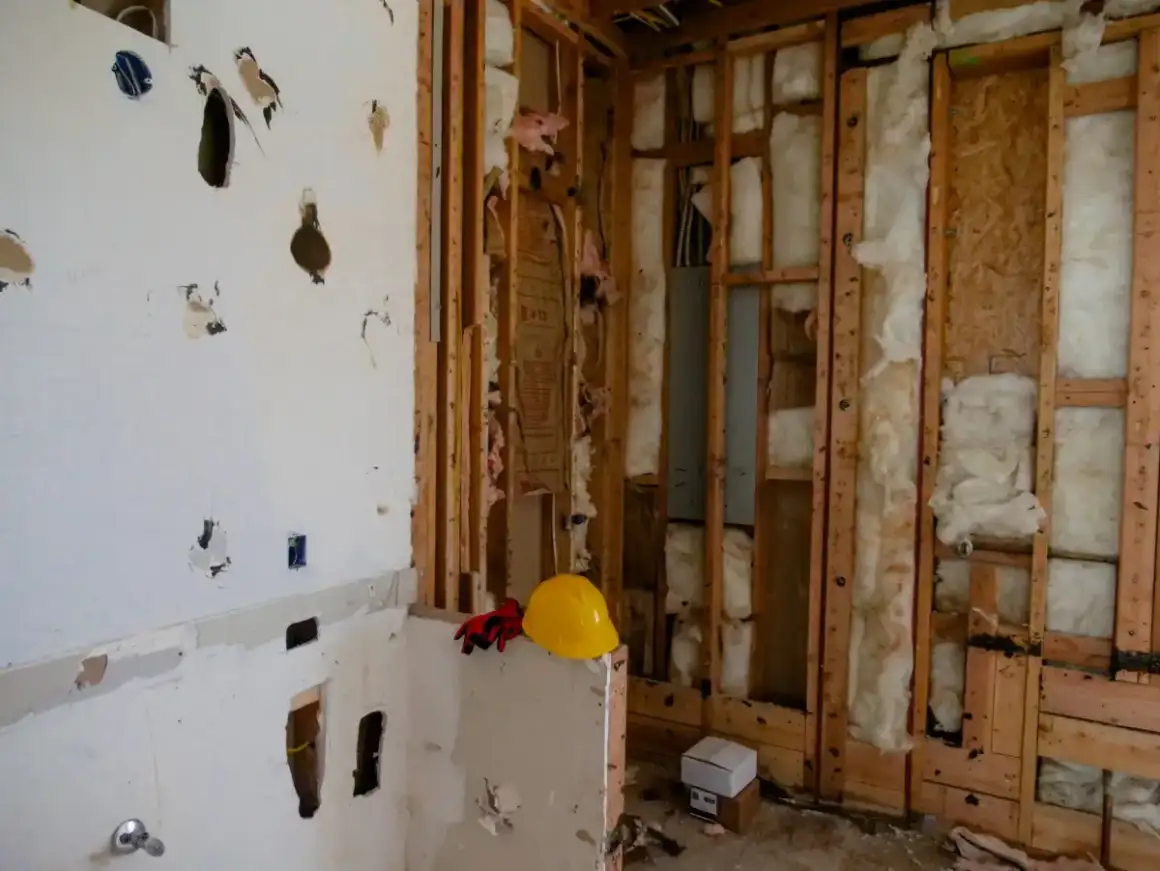
Replacement is what happens when repair stops making economic sense. Board patched four times, a ceiling that has cracked across its width, walls crumbling at the edge of every opening, or a lower level where groundwater sat long enough that the gypsum lost its integrity — all past the point where another patch is the sensible answer.
The threshold is coverage. Once you are repairing more of a wall than you are leaving alone, reboarding costs less and produces a flatter, longer-lasting surface. That crossover arrives sooner than most people expect, because each additional patch makes the next harder to blend and the surface progressively less flat.
Localized damage does not need this. A hole, a crack, a row of nail pops — all leave the surrounding board in place and belong on the drywall repair page.
What’s Included in a Madison Drywall Replacement Quote
- Assessment of how far the failed board actually runs, usually beyond the visible damage
- Containment and floor protection before demolition begins
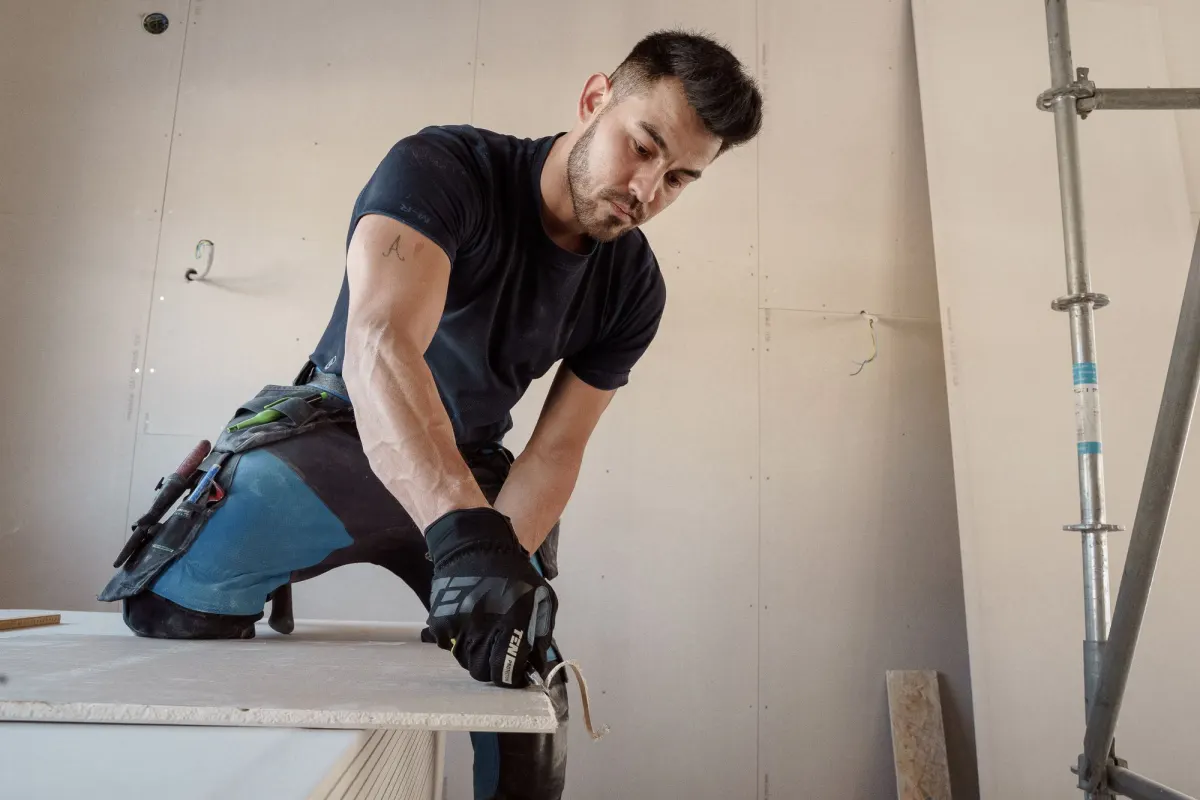
- Old board removed and hauled out, fasteners pulled from the framing
- Framing inspected once open for rot, prior water tracking, missing backing and bow
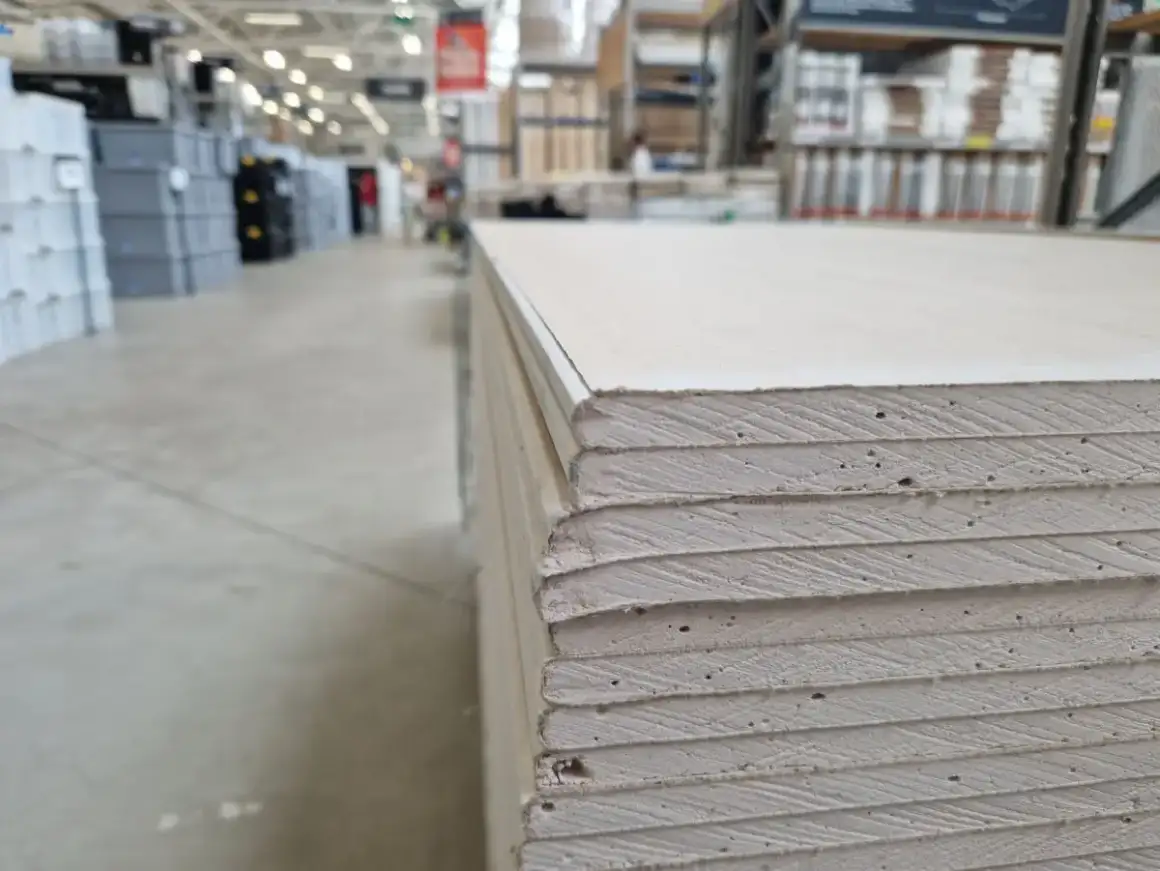
- New board selected by location: standard, moisture-resistant, or Type X
- Board hung with staggered seams and butt joints landed on framing or backing
- Full three-coat tape and finish, then texture matched to adjacent surfaces
- Debris removed and the space left clean
Drywall Replacement Services in Madison, WI
Damaged Drywall Replacement
Board that has failed structurally rather than cosmetically: gypsum crumbling under pressure, panels flexing between studs, surfaces so heavily repaired they no longer sit in one plane. The tell is at an opening — if cutting a small hole produces a ragged edge that keeps breaking away rather than a clean cut, the core has lost integrity and patching it is building on sand. Replacement here is not the expensive option; it is the one that ends the cycle.
Wall Drywall Replacement
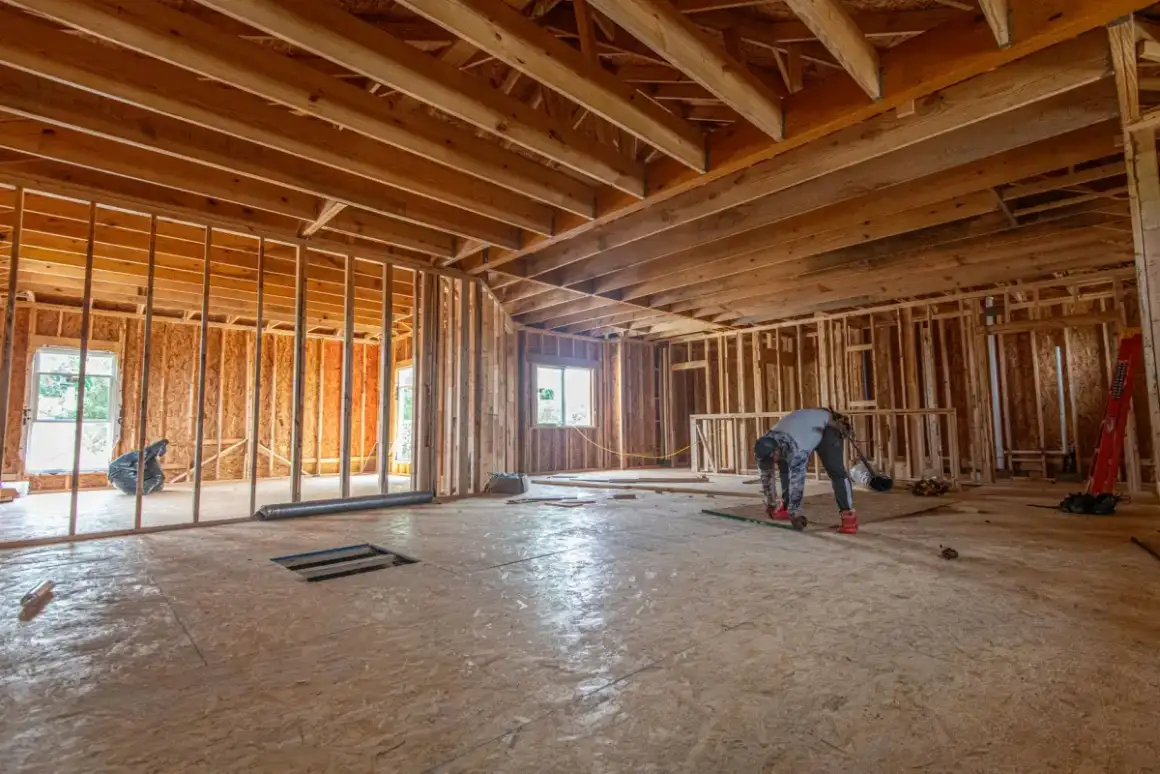
A full wall taken to studs and reboarded. Doing the whole wall rather than a large patch means no blend line to conceal, which is why full-wall replacement often finishes better than a patch covering half of it. It also opens the framing, which is the practical moment to check for bowed studs and add furring — invisible in the finished room, and the difference between a wall that reads flat under a west-facing window and one that does not.
Ceiling Drywall Replacement
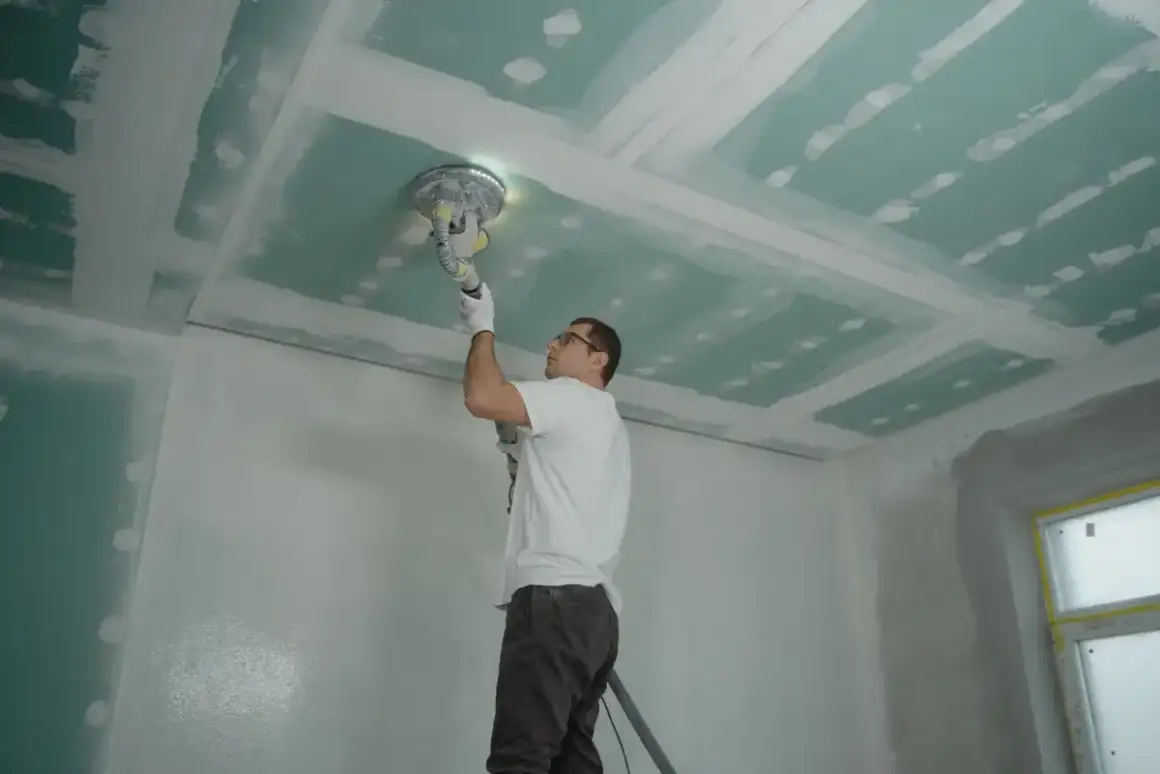
Ceilings that have sagged, cracked across their width, or been compromised from above. Ceilings are the least forgiving surface in a house because you view them in flat light from across the room, so a replaced ceiling almost always looks better than a repaired one. Replacement usually means 5/8-inch board rather than half-inch, since the thinner panel creeps between joists over time — particularly at 24-inch spacing, which is common in the Dane County housing built through the 1960s and 70s.
Partial Drywall Replacement
Replacing a defined section — the lower few feet after a basement water event, one side of a room, the run below a window — while leaving sound board above or beside it. The seam between old and new is taped and feathered like any other joint and texture is matched across the transition. This is the middle option between patching and gutting, and it is the right call whenever the damage has a clear boundary, which groundwater damage usually does.
Drywall Removal & New Installation
Full removal and reboard as one scope: demolition, disposal, framing inspection, new board and finishing. Handling it as a single job rather than hiring demolition and installation separately matters more than it sounds, because whoever hangs the new board has to live with whatever the framing turns out to be. In older Madison housing, removal also needs care — what presents as drywall is occasionally a thin board layer applied over original plaster.
Signs You Need Drywall Replacement
- The same wall has been patched three or four times and no longer looks flat
- Board crumbles or breaks away at the edges whenever a hole is cut
- A ceiling is visibly sagging between joists or cracked across its width
- Water sat against the board long enough that it feels soft or spongy
- Panels flex or sound hollow when pressed between framing members
- A remodel has opened the walls anyway and reboarding is cheaper than working around them
How Drywall Replacement Works
- 1
Establish How Far the Failure Runs
Before anything comes out, extent gets established, because visible damage is rarely the full picture. Board is pressed and sounded across the surrounding area to find where it stops being sound. Where water was involved, the search follows the path moisture took rather than the stain — gypsum wicks upward and sideways, so the failed zone is taller and wider than the mark. In Dane County that frequently means groundwater arriving at floor level and running higher up a basement wall than anyone expects. Ceilings get checked at the fastener lines, since sag shows first as a slight dish between joists. This mapping sets the real scope and stops a job growing mid-way.
- 2
Contain, Then Demolish in Sections
Demolition is the messiest stage of any drywall work, so containment goes up first: plastic at doorways, floors covered, and on extensive work negative air to keep dust from touring the house. Board is cut out in manageable sections rather than pulled, controlling both dust and the risk of tearing adjacent surfaces that are staying. Fasteners get pulled from the framing rather than hammered flat, since a leftover screw head holds the new panel off the stud by just enough to show. In pre-1980s homes any textured ceiling coming down is tested for asbestos before this stage rather than during it.
- 3
Inspect the Open Framing
With the cavity exposed, framing gets examined — and this is value that only appears during a replacement. Studs and joists are checked for rot, insect damage and old water tracking nobody knew about. Plane and plumb are checked with a long straightedge, because board fastened to bowed framing telegraphs that bow permanently, and furring added now costs very little against a wavy finished wall. Backing goes in wherever a seam or corner would otherwise land in open air. Wet insulation comes out and the cavity dries before anything closes back up.
- 4
Reboard, Finish, and Blend
New panels are chosen for location — moisture-resistant below grade or near plumbing, Type X where a garage or shared assembly requires a rating — then hung with seams staggered and butt joints landed on framing or backing. Tape, fill and finish coats follow, each feathered wider, with real drying time between them. Where new work meets existing surfaces the joint is feathered well past the transition and surrounding texture is sampled and reproduced on scrap before application. The finished area is primed so it does not flash against older paint.
What Does Drywall Replacement Cost in Madison, WI?
- Square footage of board coming out and going back in
- Demolition and disposal, which repair jobs do not carry
- Ceiling versus wall work, since overhead board is slower and usually thicker
- What the framing turns out to be once it is open
- Finish level, from Level 3 under texture to a Level 5 skim coat
- Texture matching where new work meets surfaces that are staying
- Whether a ceiling requires asbestos testing before demolition
| Service | Cost Per Sq. Ft. | Typical Job |
|---|---|---|
| New Drywall Installation | $1.50 – $3.00 per sq. ft. | $1,000 – $3,254 per project |
| Small Patch or Hole | $75 – $350 per patch | $300 – $500 for a contractor visit |
| Larger Wall Repair | $500 – $800+ per patch | Scales with how much board comes out |
| Ceiling Repair | $297 – $472 per hole | $220 – $1,300 for the full ceiling |
| Water-Damaged Drywall | $500 – $2,500+ | Depends how far the moisture travelled |
| Texture Matching | $150 – $450 per patch | Runs 30 – 40% above a smooth finish |
Based on 2026 national cost-guide data from Angi, HomeGuide, and Homewyse. Madison and Dane County rates land above or below these ranges depending on ceiling height, access, texture type, and how much board has to come out before new board goes back. Texture matching is the row that moves most often here, since so much of the local housing stock already has a sprayed finish to match into. You get a firm number after someone sees the job.
Installation guides put new board at roughly $1.50 to $3.00 per square foot, and replacement runs above that because demolition, disposal and framing remediation sit on top of the same install. The honest caveat is that a replacement quote carries more uncertainty than a repair quote, since nobody knows what a cavity holds until it is open. A good estimate says so explicitly and names what would change the number — wet insulation, rotted framing, board layered over old plaster — rather than presenting one figure and revising it later.
What to Look for in a Madison Drywall Replacement Contractor
They Map the Damage Before Quoting
Pressing and sounding around the visible damage takes ten minutes and determines real scope. A number produced from the stain alone is a number that will change.
The Estimate Names What Could Move It
Rotted framing, wet insulation, or board layered over old plaster all change the job. Hearing those possibilities before demolition is very different from hearing them mid-job.
They Check the Framing While It Is Open
A replacement is the one chance to fix bowed studs and missing backing cheaply. Someone reboarding without looking is passing up the only moment that fix is affordable.
Containment Precedes Demolition
Tear-out generates far more dust than sanding. Plastic at doorways and covered floors should be in place before the first panel comes down, not improvised once the mess starts.
Residential & Commercial Drywall Replacement
Residential
Residential replacement in Madison is driven by water in lower levels, by age, or by a remodel that has opened the walls anyway. It happens in an occupied house, so sequence matters: containment first, demolition in controlled sections, and a schedule that accounts for drying time between finish coats rather than promising a room back the next day.
Commercial
Commercial replacement is typically damage in a space that must keep operating, or a refit where old partitions come out entirely. Work is staged after hours or floor by floor, and where a wall separates tenant spaces the rated assembly has to be put back as specified — replacing the surface without restoring the rating is a code problem rather than a finish one.
When Drywall Replacement Isn’t the Right Call
- Localized damage — a hole, a crack, a row of nail pops. Reboarding a wall for that is spending money for no gain; see the drywall repair page.
- Walls that are structurally sound but simply look tired. Skim coating to a Level 5 costs far less than tearing out.
- An active leak or unresolved groundwater. Replacing board over a source that has not been fixed buries the problem in a new wall.
- Pre-1980s textured ceilings you need down this week. Asbestos testing comes first and the result sets the schedule.
- Addresses outside Madison and Dane County.
Frequently Asked Questions
- How do I know whether to repair or replace?
- The practical test is coverage. If you are patching more of a wall than you are leaving alone, replacing is cheaper and gives a better surface. Other clear signals: board that crumbles when cut, panels that flex when pressed, a surface patched several times that no longer sits flat, or gypsum that stayed wet. Isolated holes and cracks are repairs, every time.
- Will replacement create a lot of dust?
- Demolition produces considerably more dust than sanding, which is why containment goes up before anything comes down. Plastic at doorways, covered floors, and on larger jobs negative air to keep dust in the work zone. It remains a disruptive process, and anyone suggesting otherwise has not done many.
- Do you have to replace a whole wall or just part?
- Partial replacement is common and often correct — the lower section after a basement water event, or one side of a room. The transition between new and existing board is taped and feathered like any seam and the texture matched across it. Full-wall replacement makes sense when damage has no clean boundary, or when a blend line would land where light will find it.
- What if you find problems behind the wall?
- Common enough that a good estimate anticipates it. Rotted framing, old water tracking, wet insulation or missing backing all turn up once a cavity opens. Wet insulation comes out and the cavity dries before anything closes. Framing issues are raised and priced before work continues rather than absorbed silently or sprung at the end.
- Is 5/8-inch drywall necessary for ceilings?
- It is the better choice and often required. Half-inch board sags between joists over time, particularly at 24-inch spacing, which is common in Dane County housing from the 1960s and 70s. Five-eighths is stiffer and stays flat. It is also what Type X fire-rated board typically is, so a garage ceiling or shared assembly will usually need it regardless.
- Can you replace drywall in one room without disturbing the rest of the house?
- Largely, with containment at doorways and covered pathways to the exit. What cannot be isolated is noise and traffic, since board and debris travel out and new panels come in. Worth discussing at the walkthrough — for occupied houses it often decides which week the job should happen.
Learn More
- Gypsum Association GA-214 — the finish-level standard new board is taken to before paint
- US EPA — Asbestos — why textured ceilings in pre-1980s homes are tested before demolition
- US EPA — Mold Course, Moisture and Building Materials — how long materials must dry before a wall can be closed back up
Need Drywall Replacement in Madison, WI?
Tell us what’s going on and get an on-site estimate — no charge for the visit, and no obligation to book the work.
Get My Free Estimate